
Introduction
A tent revival is a Christian revival meeting held in a temporary outdoor tent. It commonly includes preaching, prayer, music, and group worship. Churches and religious organizations still use this format for outdoor services and community outreach.
If you are organizing a tent revival, the structure needs to do more than cover the audience. People must be able to see and hear the speaker, move through the space, and enter and leave safely. The site, ground surface, equipment, and length of the event will all affect the tent you choose.
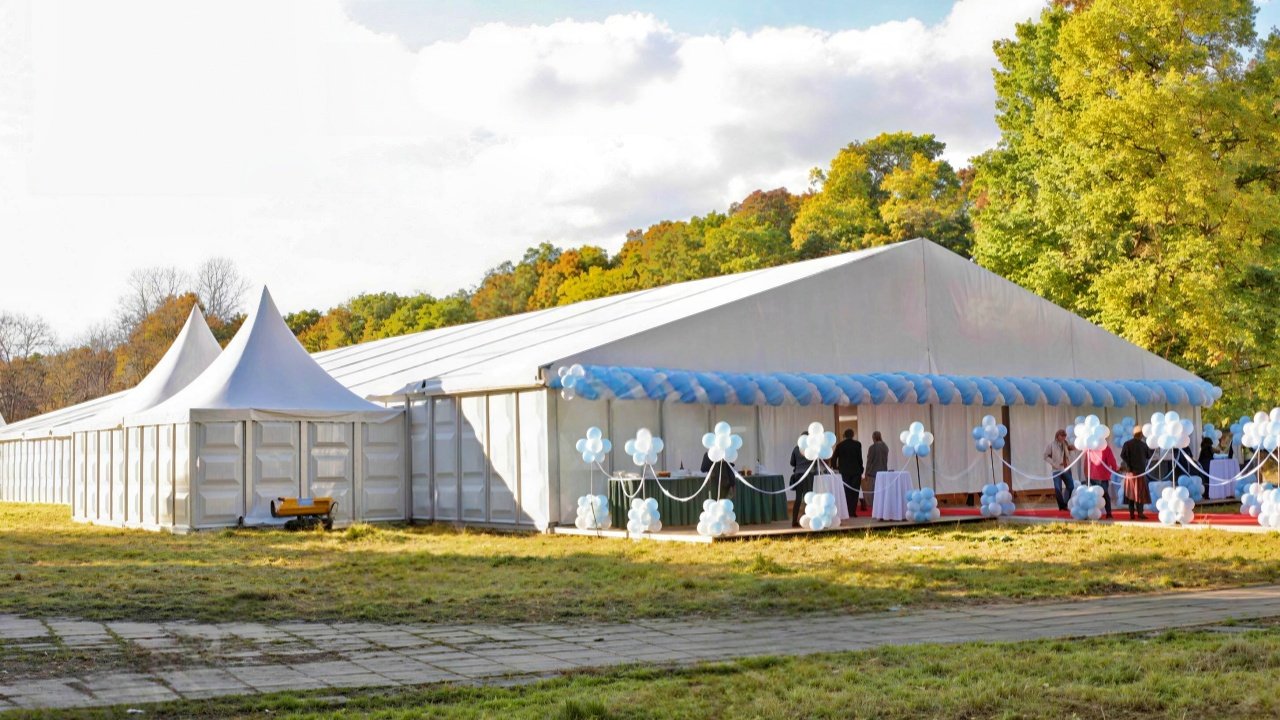
What Happens at a Tent Revival?
The program varies by organizer. A revival meeting may include sermons, prayer, hymns, Bible readings, and opportunities for attendees to speak with church members. Some meetings last one day; others run for several days.
The tent gives organizers a temporary gathering space when a church building is too small, unavailable, or far from the community they want to reach. Its layout can be planned around the congregation, stage, sound system, and expected attendance.
What to Plan Before Choosing a Revival Tent
1. Attendance and Seating Layout
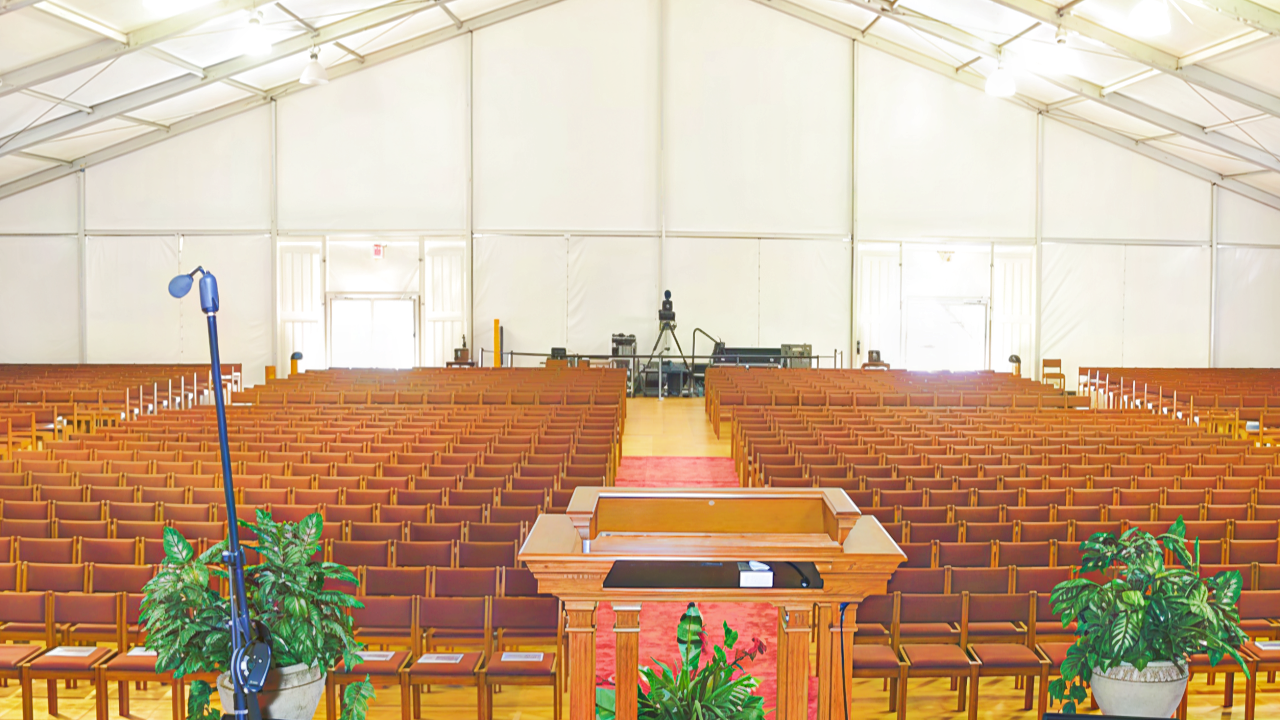
Start with the expected number of attendees, then draw a basic floor plan. Mark the seating area, pulpit or stage, aisles, entrances, and any space needed for a choir or sound equipment.
Attendance alone does not determine tent size. Two meetings with the same number of people may need different structures if one uses only rows of chairs while the other includes a large stage or separate activity areas. Use the proposed layout and local occupancy requirements to confirm the final size.
2. Site Dimensions and Ground Conditions
Measure the usable site, including space around the tent for installation and access. Note whether the ground is grass, soil, asphalt, or concrete, and check for slopes, drainage problems, and underground utilities.
The anchoring method must suit the specific structure and site. Stakes, approved ballast, or another engineered method may be considered, but the choice should be confirmed by the tent supplier or qualified installer. Do not assume that a hard surface automatically makes ballast suitable.
3. Weather and Length of Use
Tell the supplier where and when the meeting will take place, how long the tent will remain installed, and whether it will be used again at other sites. These details affect the structure, sidewalls, ventilation options, anchoring plan, and installation schedule.
Ask which structural drawings, fabric documents, and installation instructions are available for the proposed tent. If the local authority requires specific reports or certificates, send those requirements to the supplier before ordering. The organizer should also decide who will monitor severe weather and who can stop or postpone the event.
4. Sound, Lighting, and Power
Place the pulpit, speakers, lighting, control equipment, and power supply on the floor plan before finalizing the tent. Keep cables away from walking routes and confirm that the audience can see the speaker from the planned seating areas.
If any equipment needs to be suspended from or attached to the tent structure, tell the supplier at the design stage. The allowable load and fixing method must be confirmed for that particular structure.
5. Local Permits and Access
Temporary event structures may require permits, inspections, a site plan, or documentation for the tent fabric and installation. Exit, electrical, and fire safety requirements also vary by location.
Check the requirements with the local authority and venue operator early in the planning process. Share those requirements with the supplier before approving the tent configuration.
Which Tent Structure Works for a Revival Meeting?
Compare each proposed tent drawing with the seating plan you have prepared. Mark any internal poles, entrances, and equipment positions on the plan. Check the view of the pulpit from the back rows and confirm that the full installation footprint fits the site.
Pole Tent
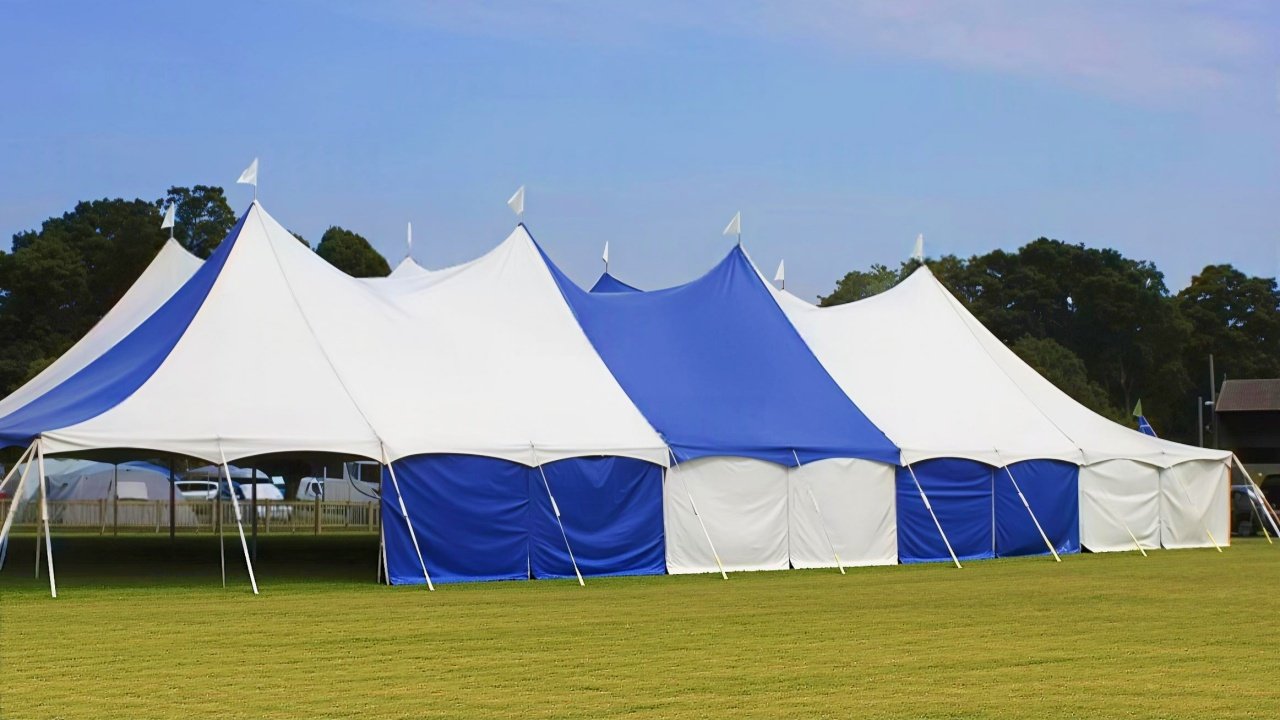
A pole tent has support poles within the covered area. On a seating plan, those poles may fall between the audience and the pulpit or reduce the space available for a central aisle. Ask for a drawing that shows the pole positions before setting the chair layout.
Pole tents also need space for their anchoring system outside the covered area. Check the full installation footprint against the site boundary, nearby paths, and any restrictions on ground stakes.
Frame Tent
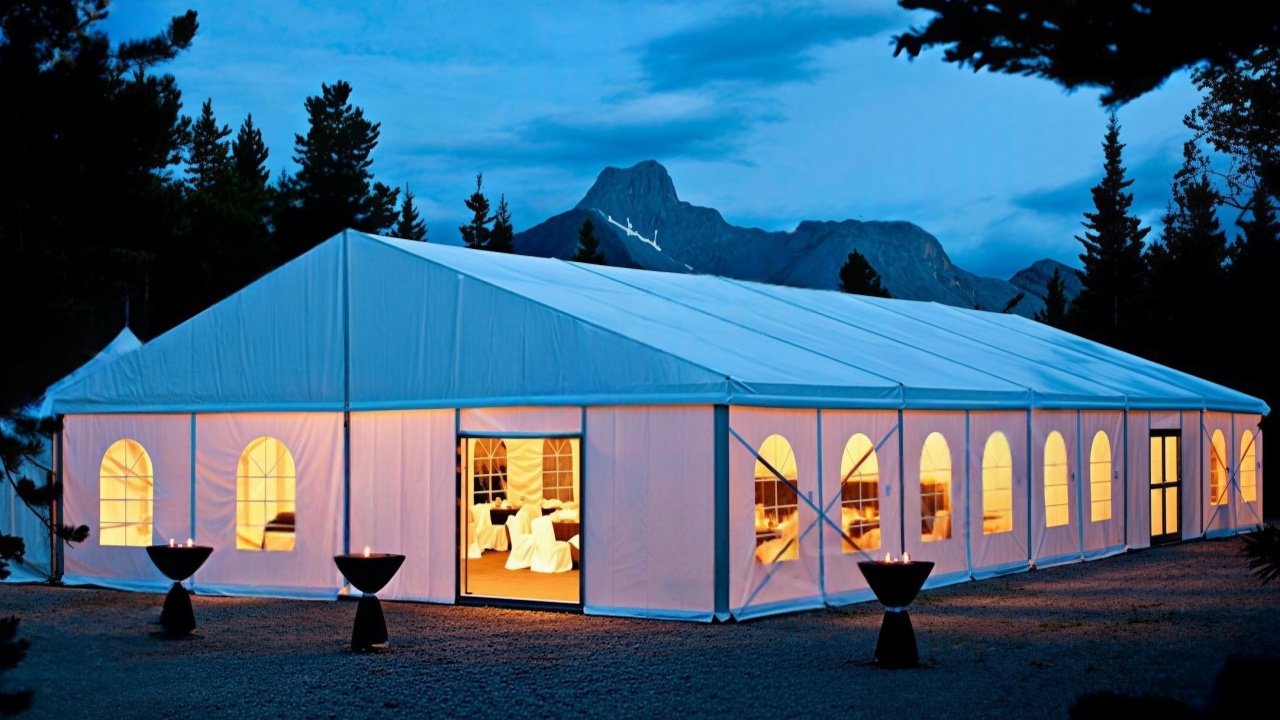
A frame tent can provide an open seating area without center poles. That is useful when the congregation needs a clear view of one pulpit or stage, particularly from the back rows.
Check more than the advertised span. The proposed drawing should show the tent’s width and length, entrance positions, sidewall options, and space for the stage and sound desk. If speakers, lighting, or screens will be attached to the structure, provide their positions and weights before the design is confirmed.
High-peak Tent
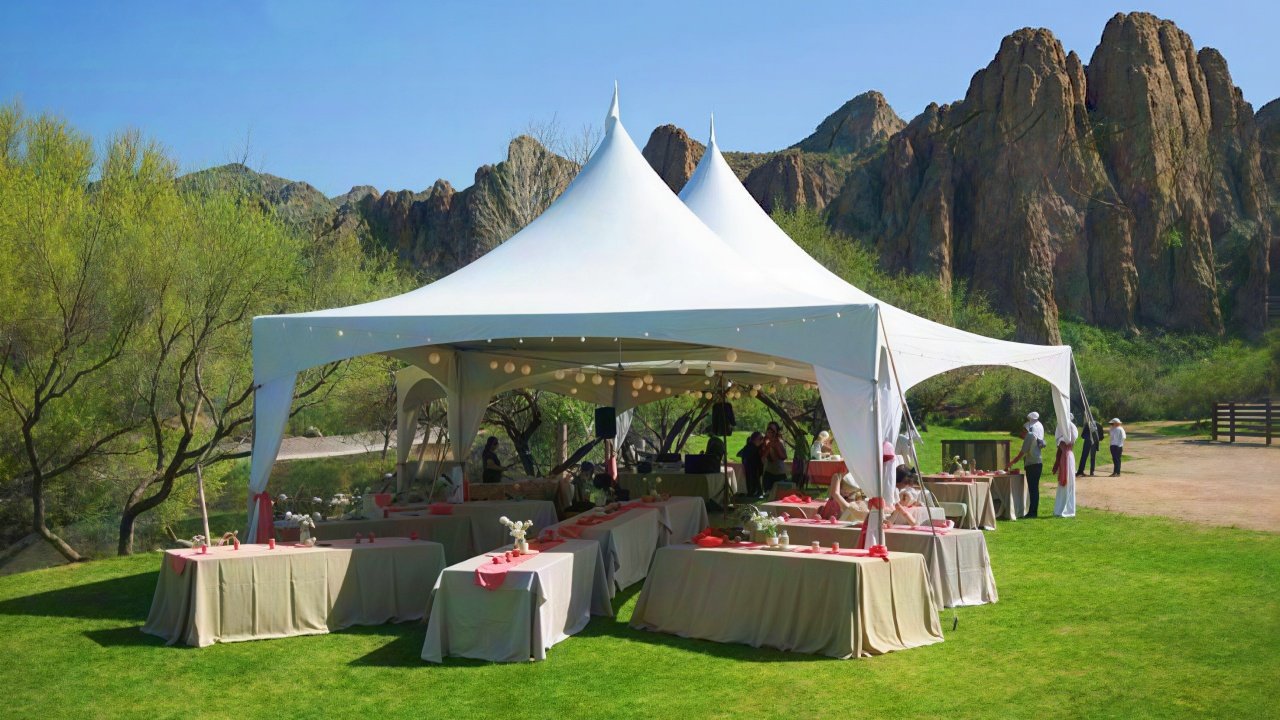
A high peak describes the roof profile. It does not tell you whether the tent has internal supports or how it is anchored; those details depend on the model. Foerstine also offers high-peak frame designs for pilgrimage events.
Choose the roof style after checking the floor plan. For a revival meeting, the useful questions are whether the pulpit remains visible from every seating section, where the entrances can go, and whether the proposed structure fits the available site.
What to Ask a Revival Tent Supplier
When requesting a quotation from a tent revival supplier, send::
- The event location and dates
- Expected attendance and seating arrangement
- A site plan or measured site dimensions
- Ground surface and any known restrictions on staking or anchoring
- Stage, choir, sound, lighting, and power requirements
- Whether the tent will be used once or moved between locations
- Local documents or approvals required for the project
Ask the supplier to explain the proposed structure, layout, anchoring approach, fabric options, installation requirements, and the documents they can provide. If you plan to use the tent repeatedly, also discuss transport, storage, replacement parts, and reinstallation.
Foerstine offers church tent options for worship and revival events. Share your site details and proposed layout to discuss a suitable configuration.
FAQs
Are Tent Revival Meetings Still Held Today?
Yes. Churches still organize tent revivals for outdoor worship and outreach.Whether for one-time or recurring church events, revival tents can accommodate gatherings of all sizes.
Can I Request a Revival Tent Proposal With Only an Estimated Headcount?
Yes, but the first proposal will be preliminary. Tell the supplier the estimated attendance, seating arrangement, and whether you need a stage, choir area, or sound desk. Confirm the tent dimensions after the seating plan and site measurements are available.
Can a Revival Tent Be Installed on Concrete?
Of course. Foerstine revival tents offer installation methods tailored to different terrains. If you want to set up the tent on concrete, you can choose between drilling holes or using load-bearing plates (which do not damage the surface).
Can a Revival Tent Be Used at More Than One Location?
Yes, our revival tents are designed to be set up repeatedly and can be moved to different locations; however, when erected, they must be set up correctly in accordance with the instructions to ensure the tent’s stability. Before purchasing, please provide us with the details of your project, and we will recommend the most suitable style, materials and dimensions to ensure we produce a revival tent that meets your requirements.
How Long Does It Take to Set Up a Revival Tent?
The time required to erect a temporary revival tent depends on the specific tent styles, sizes and the site conditions, but it is certainly much shorter than that required for traditional buildings. Anchoring, sidewalls, flooring, lighting, and sound equipment may require additional work after the frame and roof are in place.
Please provide us with the tent dimensions, a site plan, details of the ground conditions and the required accessories so that we can confirm the number of fitters, the equipment needed and the time required for this installation.