
Introduction
A military hangar is a large-span structure designed for aircraft storage, maintenance, inspection, and operational support. Unlike ordinary warehouses, aircraft hangars need to provide sufficient clear space for aircraft movement while maintaining structural stability under different weather conditions.
In this article, we will discuss the main types of military hangars, including gable roof, arch roof, curved roof, and polygon roof designs. We will also introduce their structural features, key advantages, and the important factors to consider when selecting a military aircraft hangar for your project.
Definition of a Military Hangar
A military aircraft maintenance hangar is a specialized facility used for storing, maintaining, inspecting, and protecting military aircraft and related equipment.Besides providing protection from rain, snow, UV exposure, and harsh outdoor conditions, military hangars also create controlled working areas for aircraft inspection, repair, equipment storage, logistical support, and temporary operational facilities.
Compared with conventional storage buildings, military aircraft hangars have higher requirements for structural performance, interior space, material durability, and access design because they need to accommodate aircraft with different sizes and operational purposes.Modern military hangar designs often combine large-span structures, corrosion-resistant materials, and modular construction methods to improve installation efficiency and long-term usability. For projects requiring rapid deployment or future expansion, modular military hangars and temporary military hangars provide more flexibility than traditional fixed structures.
Types of Military Hangars
Military hangars can be classified into various types based on their roof structures.Each structural type has different characteristics in terms of interior space, structural stability, construction efficiency, and application scenarios. Therefore, selecting the right structure requires a comprehensive evaluation of factors such as aircraft type, project scale, operating environment, and future expansion needs.
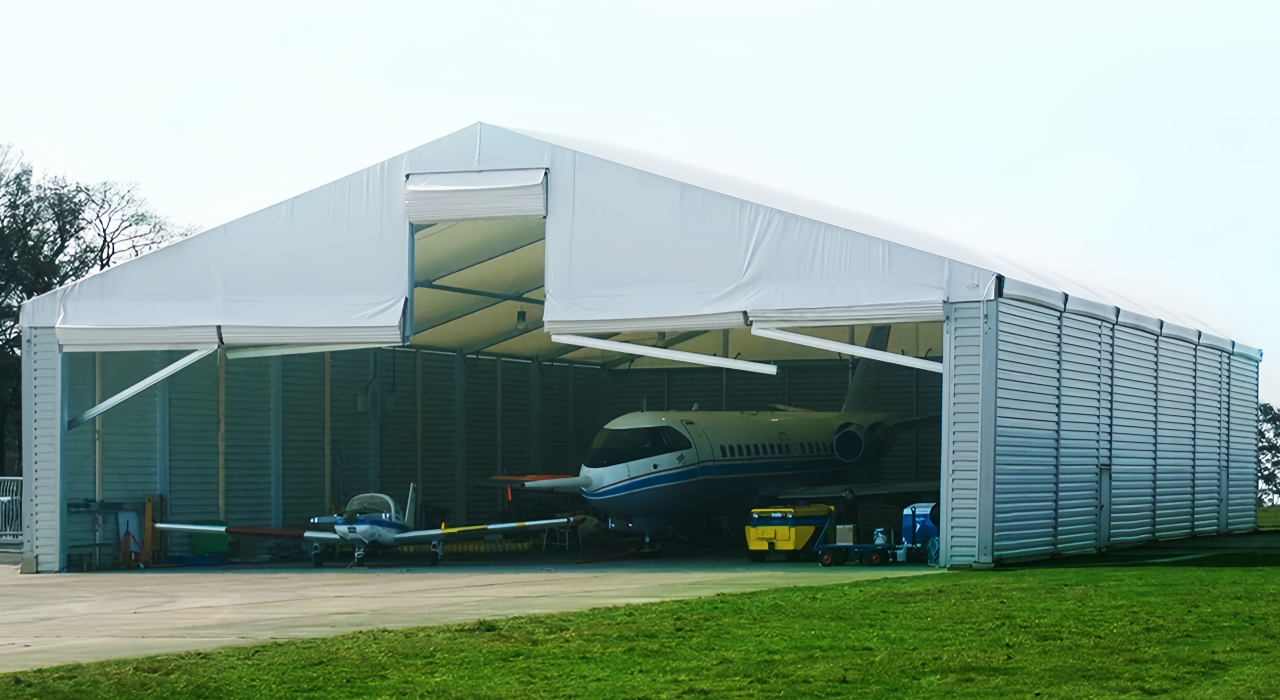
Gable Military Hangar
The gable military hangar features a classic double-sloped roof structure and is currently one of the most widely used military hangar designs. This structure provides a large interior space and employs a column-free design, capable of meeting a variety of needs such as aircraft parking, maintenance, and equipment storage. The hangar can have a maximum span of 60 meters, and its length can be flexibly extended according to project requirements, providing ample space for fixed-wing aircraft, helicopters, and transport aircraft of various sizes. Additionally, the gable-roof structure offers structural stability, facilitates future expansion and functional zoning, and is suitable for long-term or semi-permanent military projects.
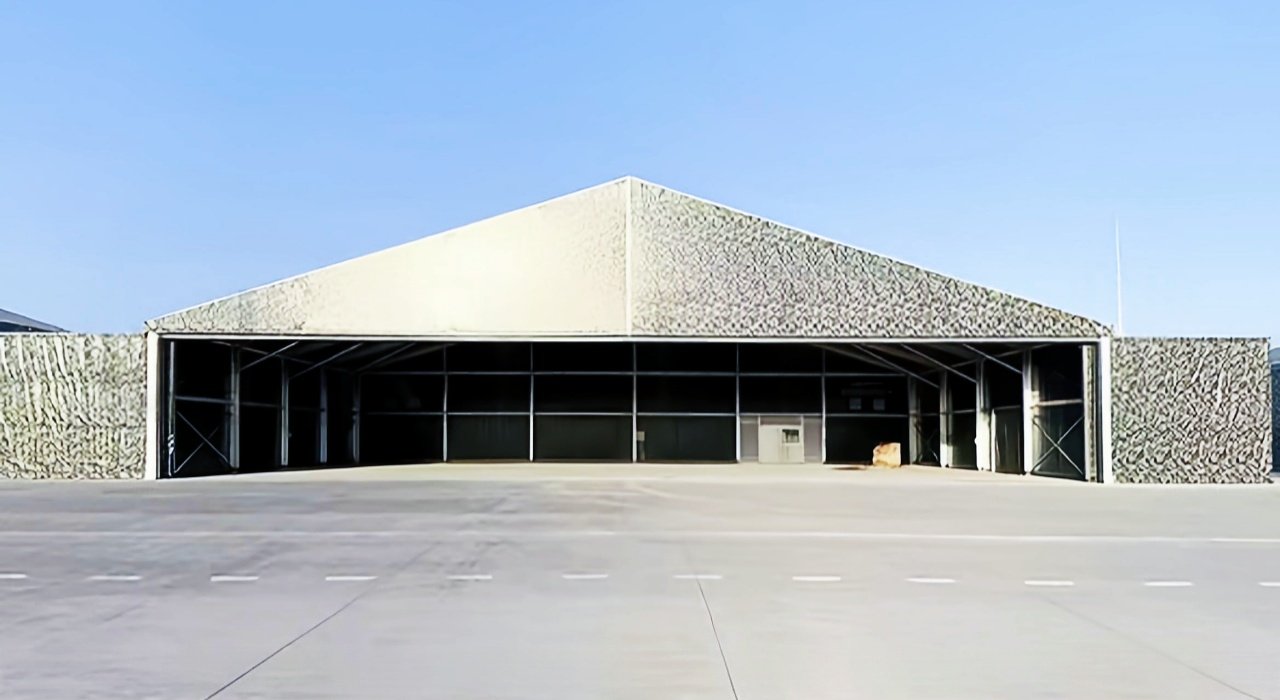
Arch Military Hangar
The arch military hangar features a curved roof design, with interior height adjustable to accommodate different aircraft types and project requirements, providing a more flexible workspace for helicopters, drones, and aircraft requiring greater vertical clearance. The curved structure effectively distributes loads, enhancing overall space utilization while ensuring structural stability, making it suitable for various military applications such as aircraft maintenance and temporary deployments.
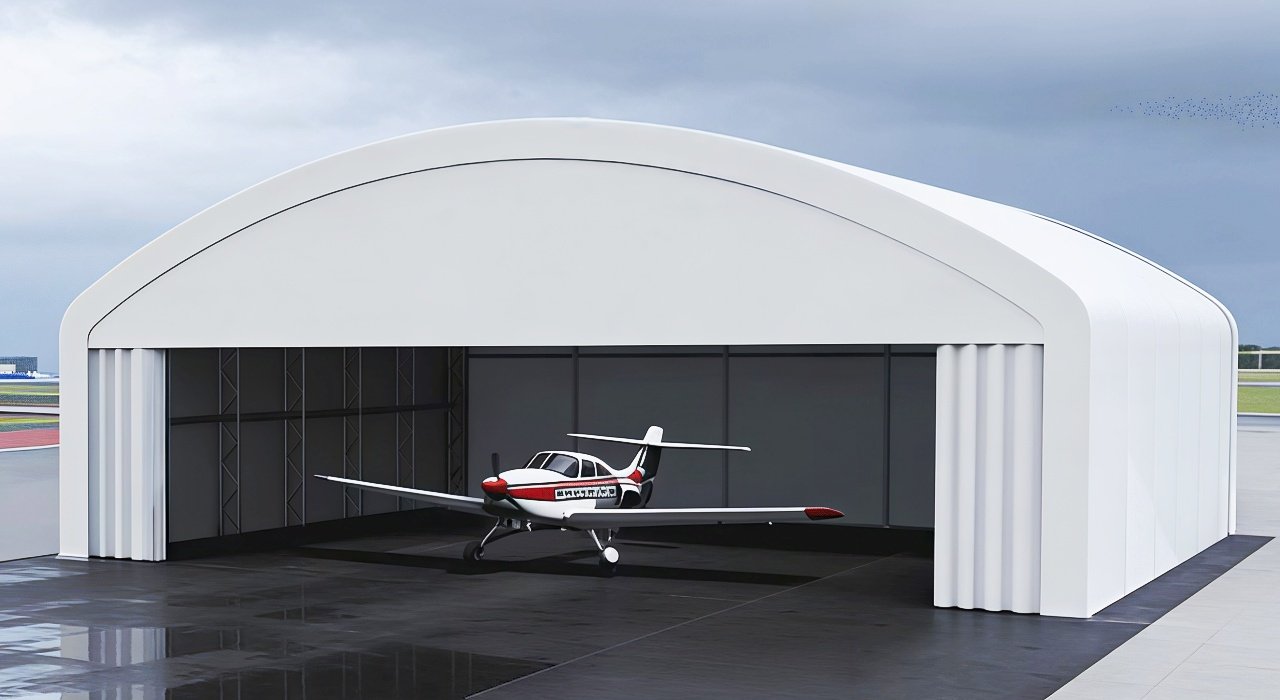
Curved Military Hangar
The curved military hangar features a streamlined roof design that distributes structural loads more evenly while effectively reducing the accumulation of rain and snow and improving drainage and snow removal efficiency. Compared to traditional roof designs, it offers better environmental adaptability in regions with strong winds, heavy rainfall, and heavy snowfall, and is therefore commonly used in military bases, temporary combat facilities, and field support projects under complex climatic conditions.
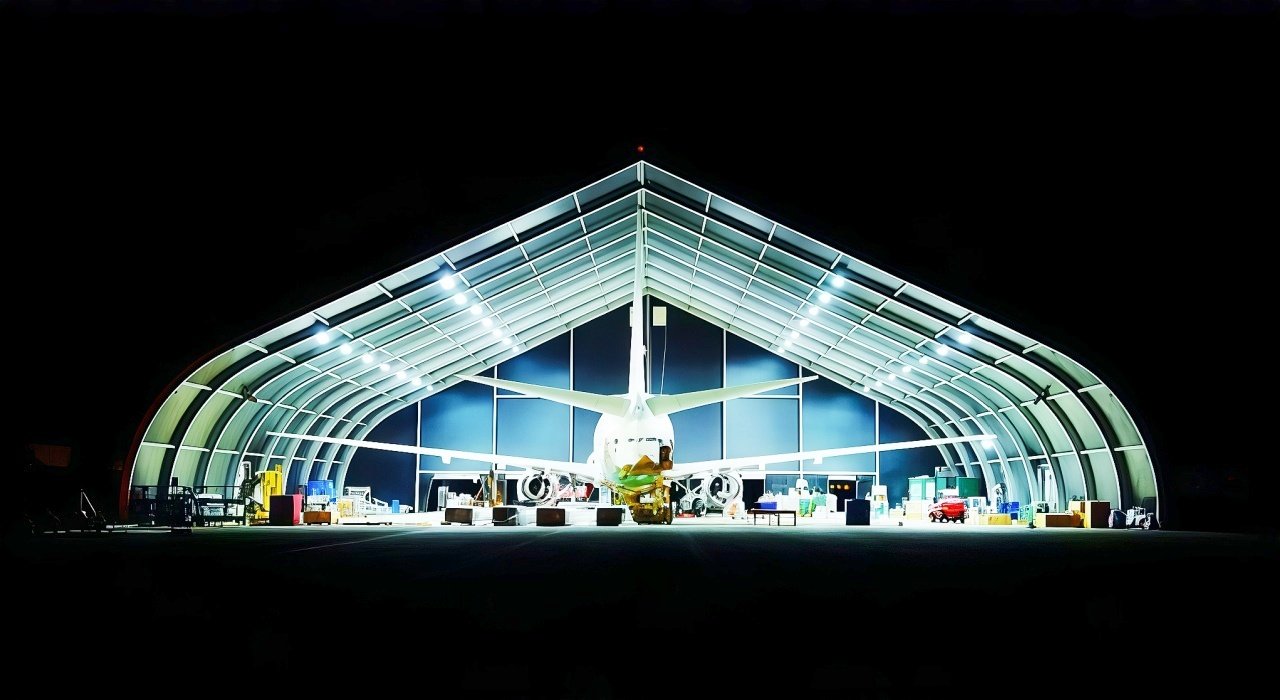
Polygon Military Hangar
The polygon military hangar employs a modular structural design, offering advantages such as easy transportation, high installation efficiency, and flexible future expansion. Its standardized components allow for rapid assembly according to your mission requirements, and the hangar’s length or functional areas can be gradually expanded as the base is developed, making it particularly suitable for projects requiring the parking of large aircraft and military bases.
Key Benefits of Military Hangars
Modern military hangars are designed to provide improved structural performance, efficient space utilization, and flexible deployment capabilities, meeting the diverse operational requirements of different military projects.
Structural Stability
Military hangars must withstand complex outdoor environments over extended periods. Therefore, structural stability is essential for ensuring the safe storage, maintenance, and protection of military aircraft and equipment. For modular military hangars, lightweight and corrosion-resistant materials such as 6061-T6 aluminum alloy are commonly selected due to their strength and durability, and combined with PVC roofing materials, typically available in 850 g/m² or 950 g/m² specifications, the structure provides resistance against UV exposure, wind, and rainfall for different outdoor environments.
Column-Free Space
Military aircraft hangars typically feature a column-free design, providing an open interior space for aircraft storage, maintenance operations, and equipment handling. This design allows the interior area to be divided into different functional zones, such as aircraft maintenance areas, operational support areas, offices, duty stations, or temporary storage spaces, according to specific military or project requirements. The open layout also facilitates the movement of large aircraft and improves the efficiency of equipment deployment.
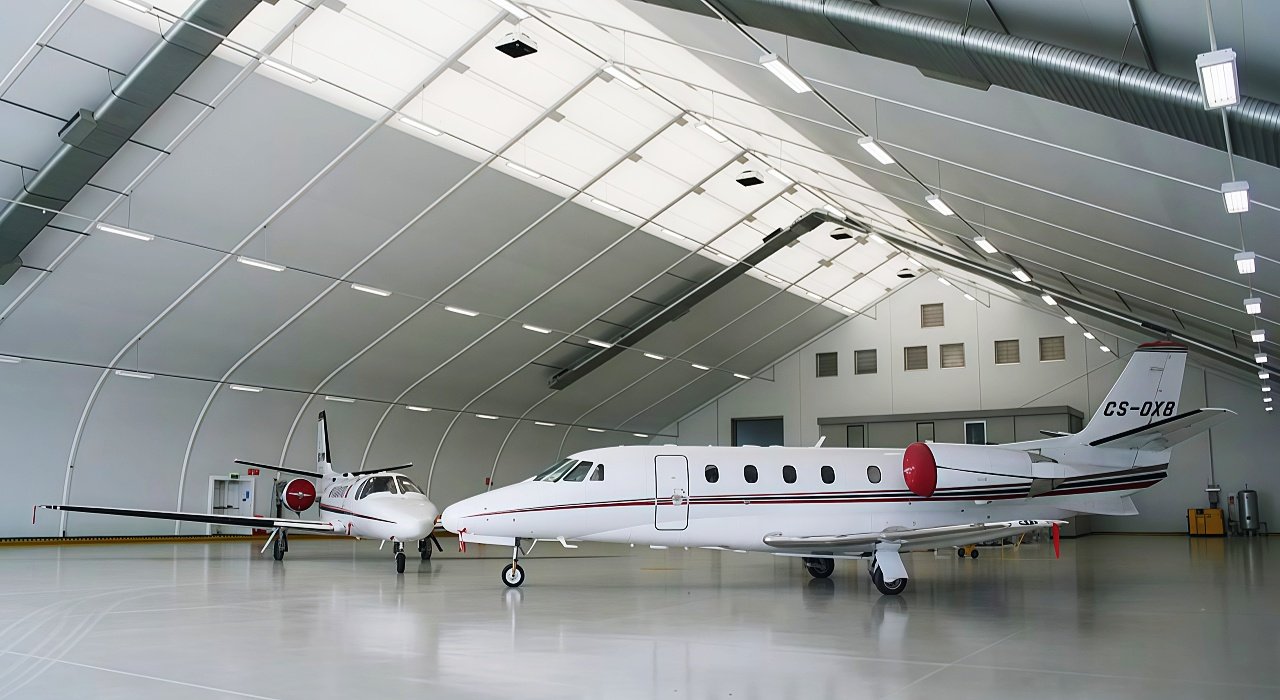
Large-Span Military Hangar Design
Military aircraft hangars can reach a maximum width of 60 meters, reducing the need for internal support structures and improving overall space utilization. The length can be extended indefinitely, with each bay measuring 3 or 5 meters. This large-span design meets the space requirements of various types of military aircraft and equipment.
Customized Services
Based on different aircraft models and operational requirements—whether for helicopters, drones, jet aircraft, or transport planes—you can customize military hangars to include doors, windows, frames, industrial-grade flooring, lighting equipment, and supporting facilities, facilitating the parking, maintenance, and inspection of various military aircraft.
Modular Installation
The Modular Military Hangar, featuring a modular structural design, is easier to transport and install, allowing you to complete assembly quickly according to your project requirements. Furthermore, its structure is not only suitable for military applications but can also be used in various settings such as industrial and warehousing environments. During assembly, you can rely on installation instructions, instructional videos, and on-site technical support to deploy the hangar rapidly.
Choosing the Right Military Hangar
Dimensions
Before selecting a military hangar, you should first evaluate the aircraft dimensions and required aircraft hangar dimensions. Military hangar design requires comprehensive consideration of aircraft size, operational requirements, and future expansion needs. Factors such as wingspan, aircraft length, overall height, door dimensions, maintenance requirements, and workspace clearance are important considerations when planning a hangar project.
Durable Materials
The materials used in a military hangar directly affect its durability, service life, and performance in different environments. Since military hangars are often used for long-term outdoor operations, they require materials with high strength, durability, and resistance to environmental conditions. Common military hangar materials include concrete, steel, and aluminum alloy, with each material offering different advantages depending on project requirements. Among these materials, aluminum alloy is commonly selected for modular military hangars because of its lightweight structure, corrosion resistance, and ease of transportation and installation.
Flexible Expansion Capabilities
Flexibility is one of the core considerations in military aircraft hangar design. This feature allows for the free expansion of the hangar to accommodate more aircraft and deploy them for military missions at any time. For projects requiring long-term expansion or rapid deployment, the Modular Military Hangar offers a more flexible solution.
Hangar Door Design
The design and operation method of military hangar doors directly affect the efficiency of aircraft entry and exit. As an important part of military hangar design, hangar doors help provide a secure environment for aircraft storage, maintenance equipment, and related facilities. They not only influence aircraft movement efficiency but also affect weather protection, airtightness, and daily operation convenience. Common aircraft hangar door types include double-leaf doors, sliding doors, and roll-up doors, which can be customized according to aircraft dimensions, operational requirements, and specific project needs.
Space Layout
Although the interior of a military hangar is spacious enough to accommodate multiple floors and facilities, careful planning is still required to divide the space into functional zones for different purposes. A well-designed interior layout can improve the efficiency of daily aircraft maintenance and make it easier for you to adjust the layout later based on mission requirements.
Conclusion
Selecting the right military hangar requires a comprehensive understanding of its structure, application requirements, and long-term operational needs. When you choosing an appropriate military hangar structure, key factors include dimensional planning, material selection, environmental conditions, and the supplier’s technical capabilities.
For your military hangar projects, choosing a supplier with experience in design, manufacturing, and project execution is essential. Discussing aircraft types, operational requirements, and site conditions in detail helps ensure the final hangar solution meets your project requirements.
Military Hangar Manufacturer
Foerstine is an aircraft hangar manufacturer with over two decades of OEM/ODM manufacturing experience and specializes in military hangars and large-scale spatial structure solutions. We offer free design proposals, customized services, and one-stop after-sales support, and hold multiple international certifications, including CE and ISO. Whether for emergency situations or long-term use, Foerstine can provide you with the right military hangar solution tailored to your project’s requirements. Please feel free to contact us to discuss the best spatial solution for your project.
FAQs
How long does a military hangar typically last?
The service life of a military aircraft hangar depends on the structural design, material quality, and local environmental conditions. Foerstine uses high-quality aluminum alloy frames and PVC covering materials, with a typical service life of 5 to 10 years which makes them suitable for projects requiring long-term operation and stable performance
What materials are used for military aircraft hangars?
Military aircraft hangars are typically built with durable structural materials designed to withstand outdoor environments. The military hangar frame is made of 6061-T6 aluminum alloy, and the covering consists of opaque, waterproof, and flame-retardant PVC, capable of meeting the demands of various outdoor environments.
How is a military hangar installed?
The installation process of a modular military hangar usually includes structural assembly, covering installation, and final inspection. We provide after-sales technical support, including installation manuals, instructional videos, and on-site guidance from our professional installation team to help you complete the hangar installation smoothly.
How wind-resistant is a military hangar?
The wind resistance of a military aircraft hangar depends on the structural design, materials, and local wind load requirements. Generally, the wind resistance of the structures we manufacture ranges from 80 to 120 km/h. Foerstine adjusts the structural design according to the wind load requirements of different project locations.
Can a military hangar be customized?
Yes. A military hangar can be customized according to aircraft types, project requirements, and site conditions. Foerstine provides customization options for you including structural design, dimensions, doors and windows, lighting systems, and other supporting facilities.