Introduction
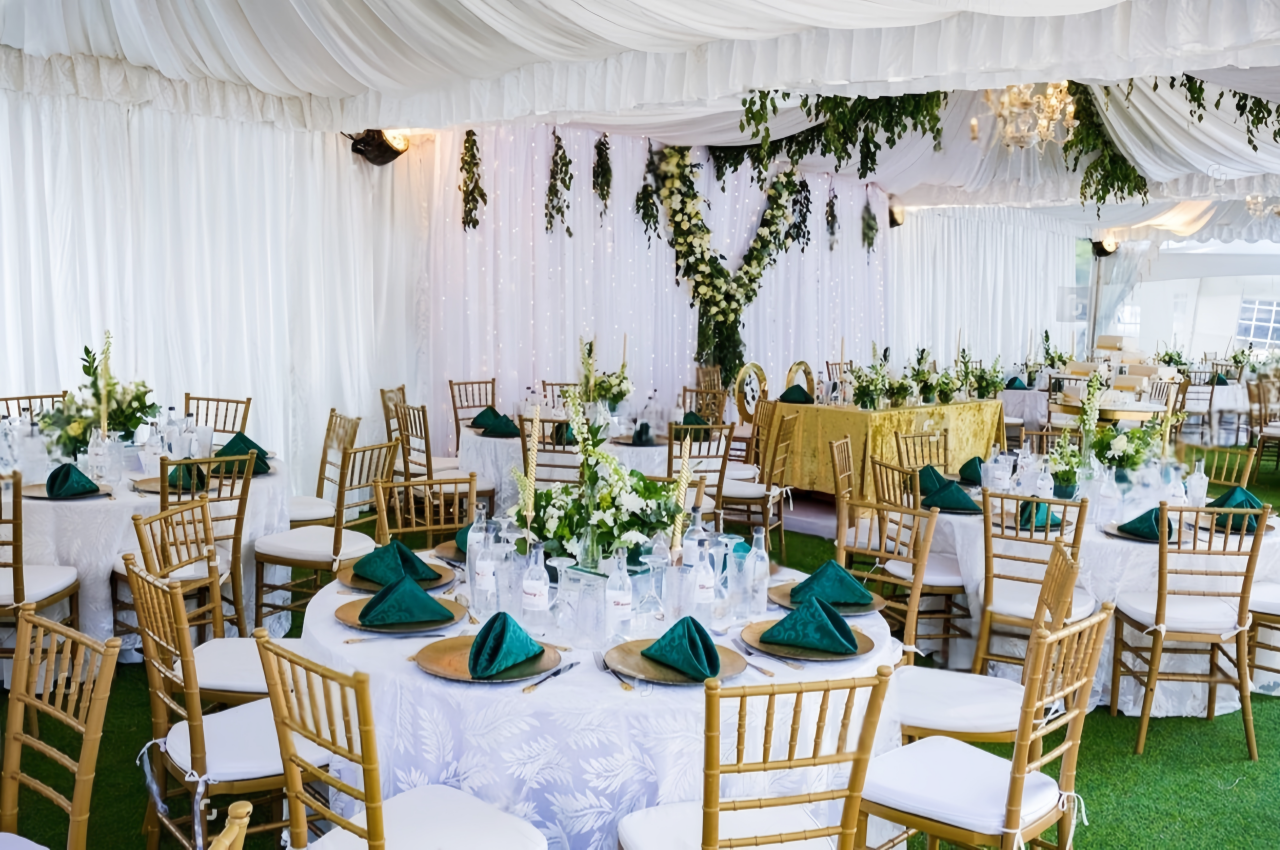
Wedding tents are flexible outdoor structures used by event rental companies, wedding venues, hotels, and planners to create temporary or semi-permanent event spaces. Common types of wedding tents include frame tents, pole tents, atrium tents, clear top tents, sailcloth tents, geodesic dome tents, stretch tents, and themed wedding tents. Each type has different advantages depending on venue conditions, guest capacity, weather requirements, and event style.
In this article, we will introduce the features of different wedding tents to help you choose the right wedding tent for your projects. For rental companies and venues looking for reliable supply partners, choosing an experienced wedding tent manufacturer is an important step for long-term projects.
Frame Wedding Tents
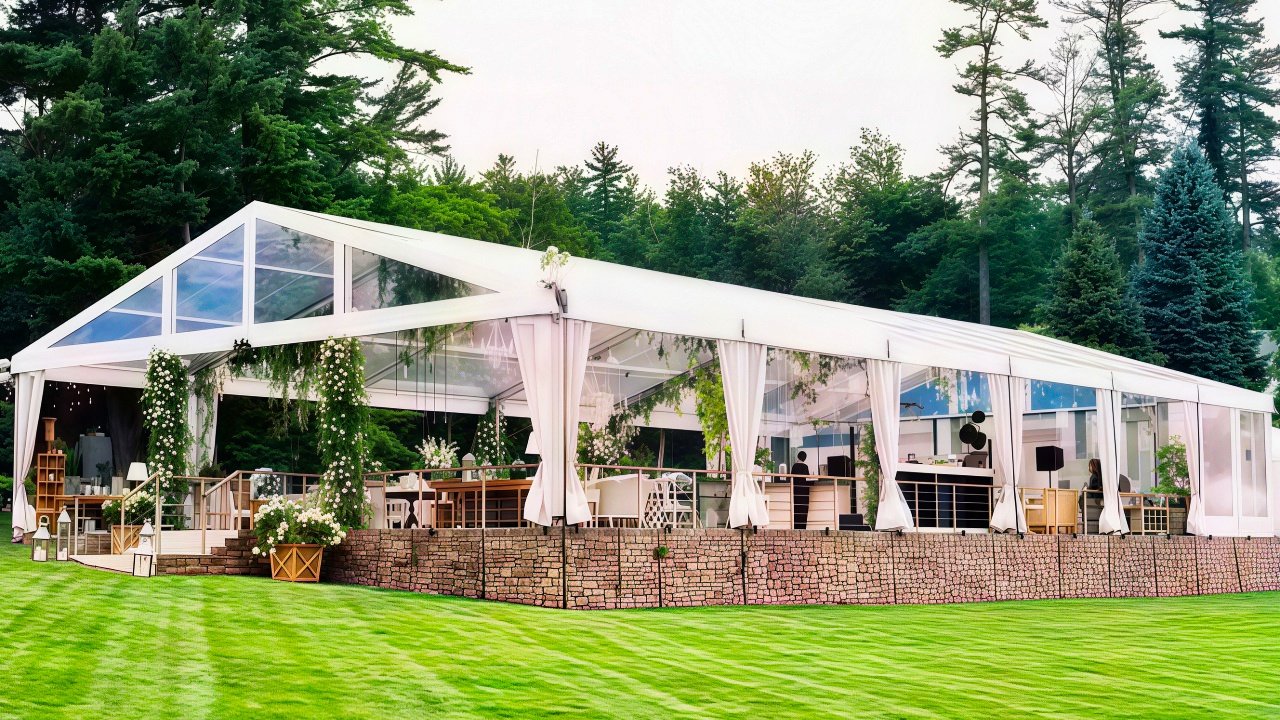
Frame tents provide a completely open and unobstructed event space. There are no center poles inside the tent, which is why they have become one of the most popular choices for wedding events. The frame structure is made of 6061-T6 aluminum alloy, which is lighter than steel while maintaining good strength and durability. Aluminum frame tents can be installed on different surfaces, including grass, concrete, decks, and other hard surfaces.
For rental companies, aluminum structures allow tents to be expanded, relocated, and reused for weddings, corporate events, exhibitions, and other commercial applications. The sectional design allows rental companies to combine different tent sizes for small weddings, corporate events, and large-scale celebrations. The open interior of frame wedding tents makes it easier to divide the space into ceremony areas, dining zones, dance floors, stages, and service areas.
Below are 5 types of common frame wedding tents for your reference.
A-Frame Tent
A-frame tents for weddings, also called A-shaped tents, are one of the most classic style among clear-span tents. They are available in various sizes, whose spans range from 3m to 70m with unlimited length. With reasonable cost and wide applications, A-frame wedding tents are a practical and cost-effective option for wedding companies.
The modular structure allows the tent length to be extended and adapted to different venue layouts, so A-frame tents are also commonly used for festivals, exhibitions, and corporate events.
High Peak Tent
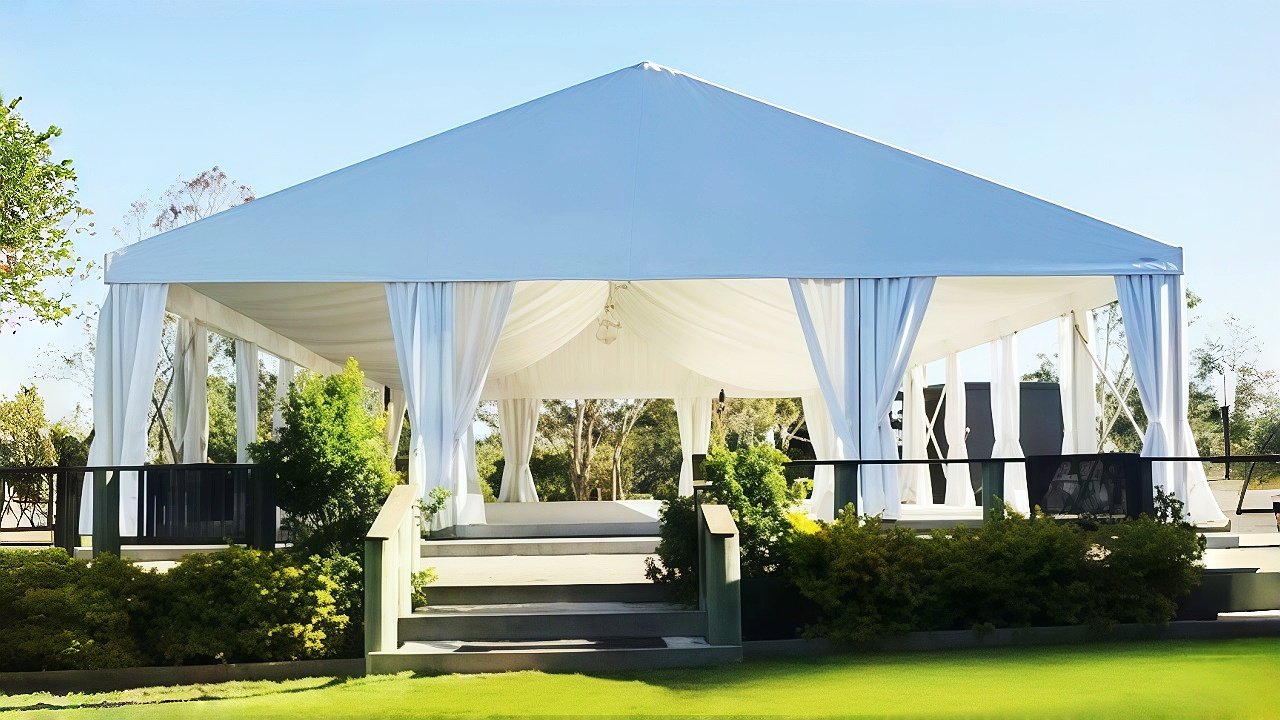
Compared with standard frame tents, high peak tents create a more elegant ceiling profile and are often selected for luxury weddings and premium outdoor events, popular in European and North American wedding markets. They create additional visual height for chandeliers, floral decorations, and lighting installations.
High peak wedding tents can use either round steel tube frames or square aluminum tube frames, combined with white PVC fabric. With proper maintenance and suitable installation conditions, peak tents can provide long-term outdoor use. Multiple high peak tents can be connected seamlessly to create larger wedding spaces. Since there are no interior poles blocking the area, you can arrange the internal layout more freely based on event requirements.
Arcum Tent
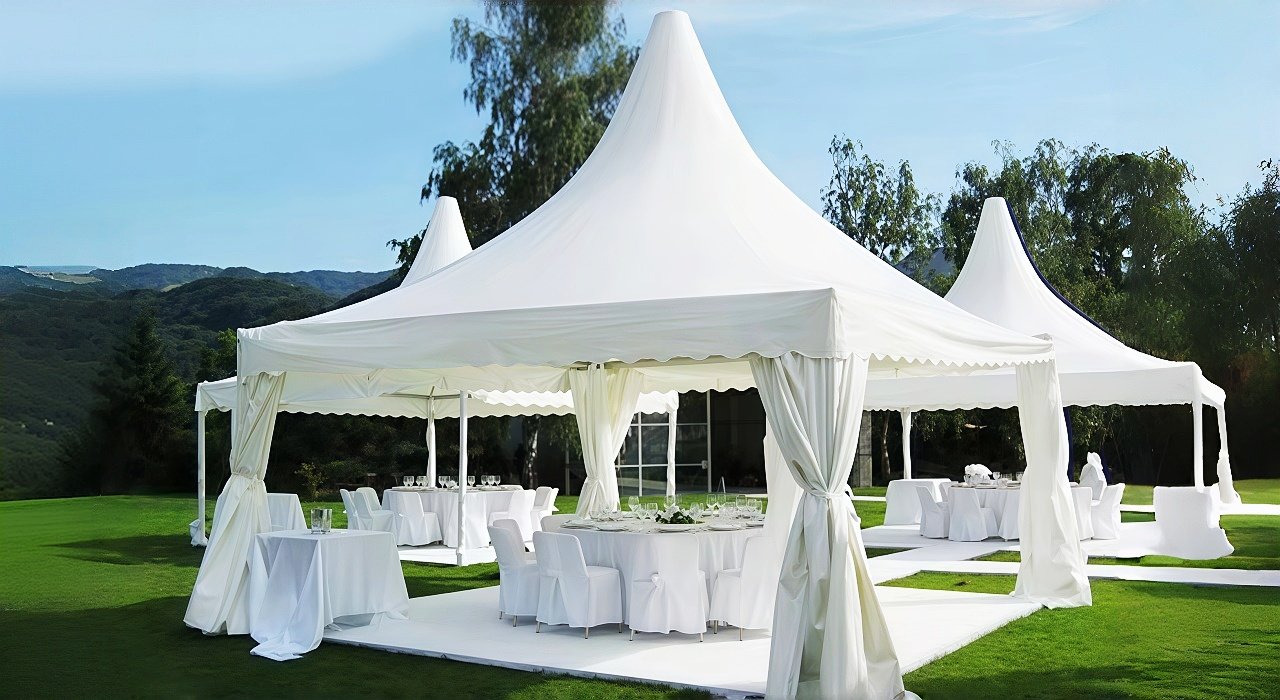
Arcum wedding tents, developed from A-frame tents, feature a soft curved roof design for elegant outdoor weddings. The curved structure reduces the visual pressure inside the tent and creates more space, allowing more freedom for decoration and layout. Depending on the structure design, anchoring system, and local conditions, arcum tents can be engineered for wind resistance requirements in different regions.
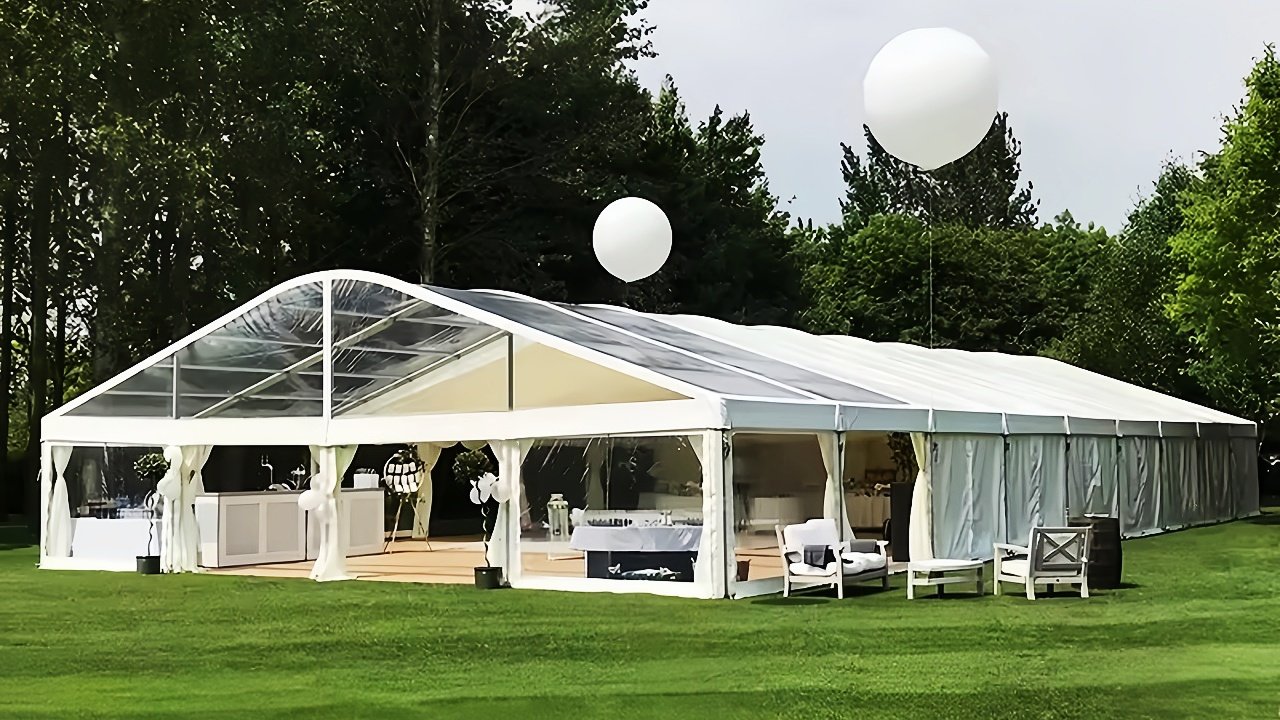
Arcum structure tents are not only used as wedding tents but can also create a more elegant outdoor wedding venue. Their distinguished appearance with reliable structure make them popular for outdoor weddings in Europe and North America.
Polygon Tent
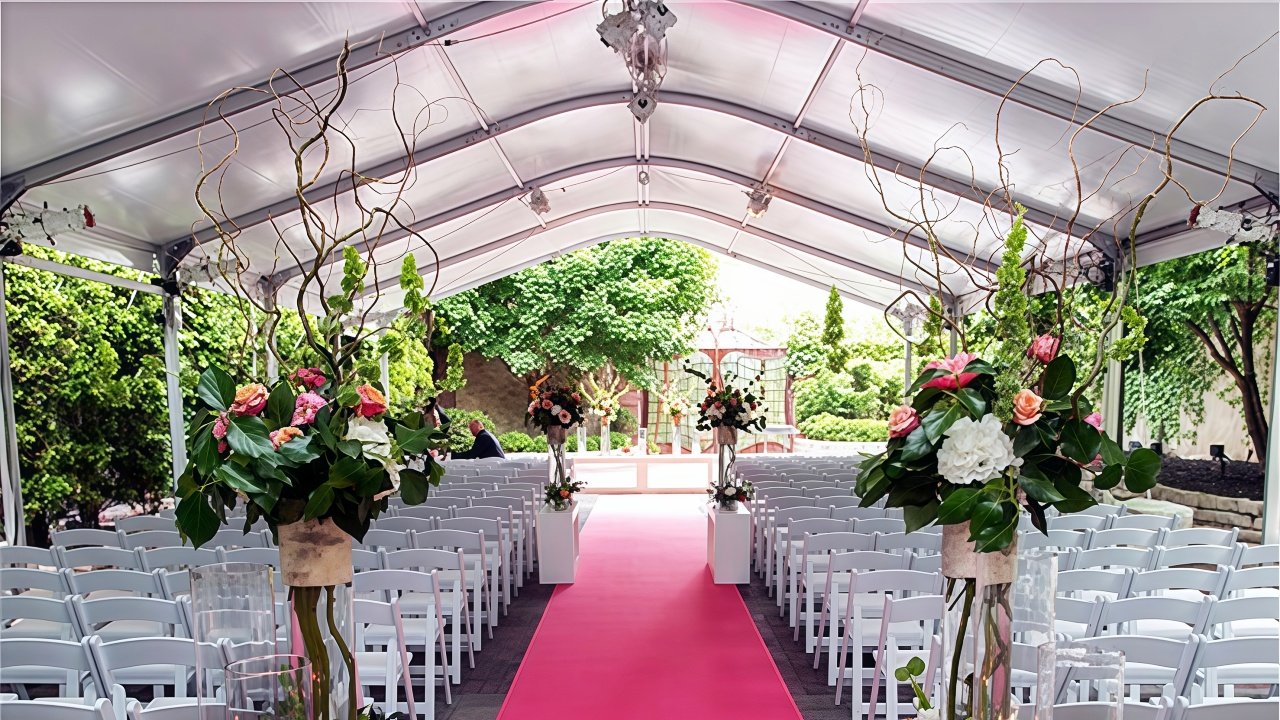
Polygon wedding tents use a multi-arched roof structure to create a distinctive architectural appearance compared with traditional rectangular event tents. The structure can be designed for local weather conditions, including wind and snow load requirements. The absence of internal barriers allows wedding planners to arrange different areas for outdoor weddings, while the high ceilings provide ample space for hanging various decorations.
Their arch angles for polygon tents can be customized based on your project needs, since professional manufacturers can provide structural design support and various data calculations. With its special geometric design, polygon wedding tents are ideal choices for wedding projects that require a distinctive appearance and flexible interior planning.

High Peak Mixed Tent
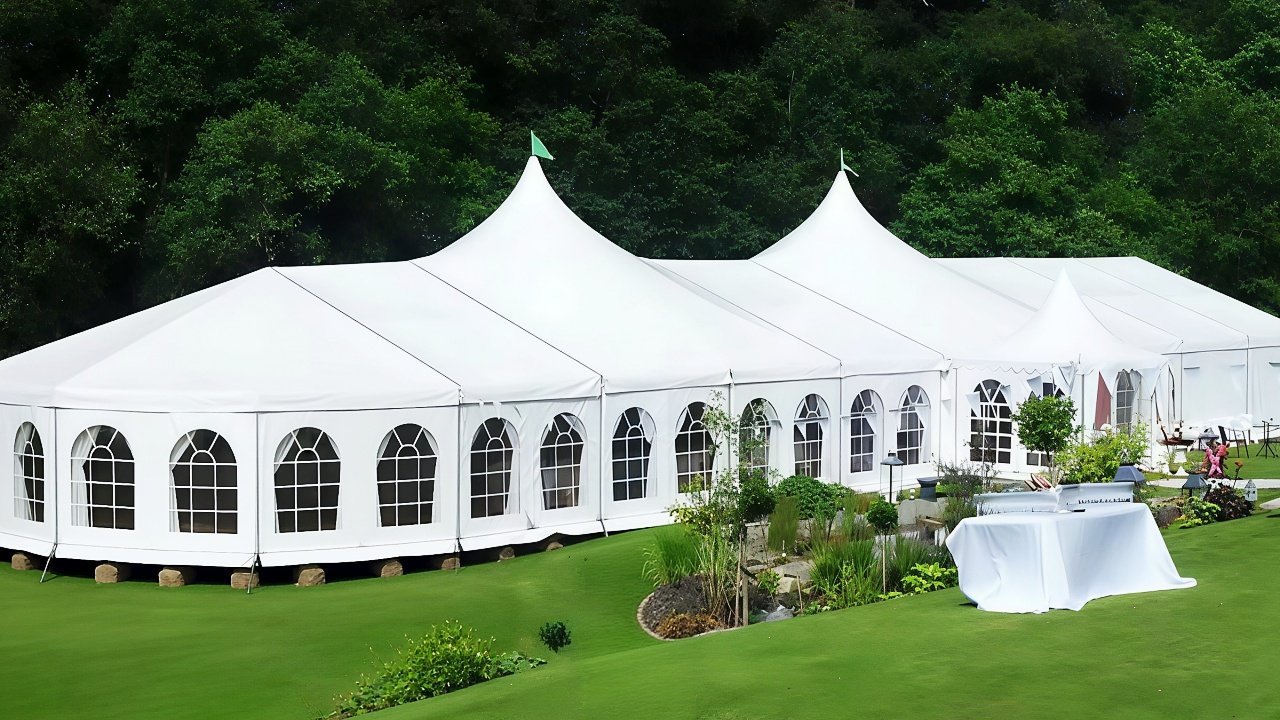
High peak mixed wedding tents combine the elegant roof design of high peak tents with the architectural style of polygon structures, creating a more dynamic event space. The combination design helps event companies and wedding venues create premium spaces that stand out from standard tents. The architectural appearance is designed for luxury weddings, premium venues, and high-end outdoor events. Mixed wedding tents allow event planners to create multiple functional zones, including ceremony areas, dining spaces, dance floors, backstage areas, etc. Also, these structures are often selected by premium wedding venues and rental companies that need a distinctive product offering.
Pole Wedding Tent
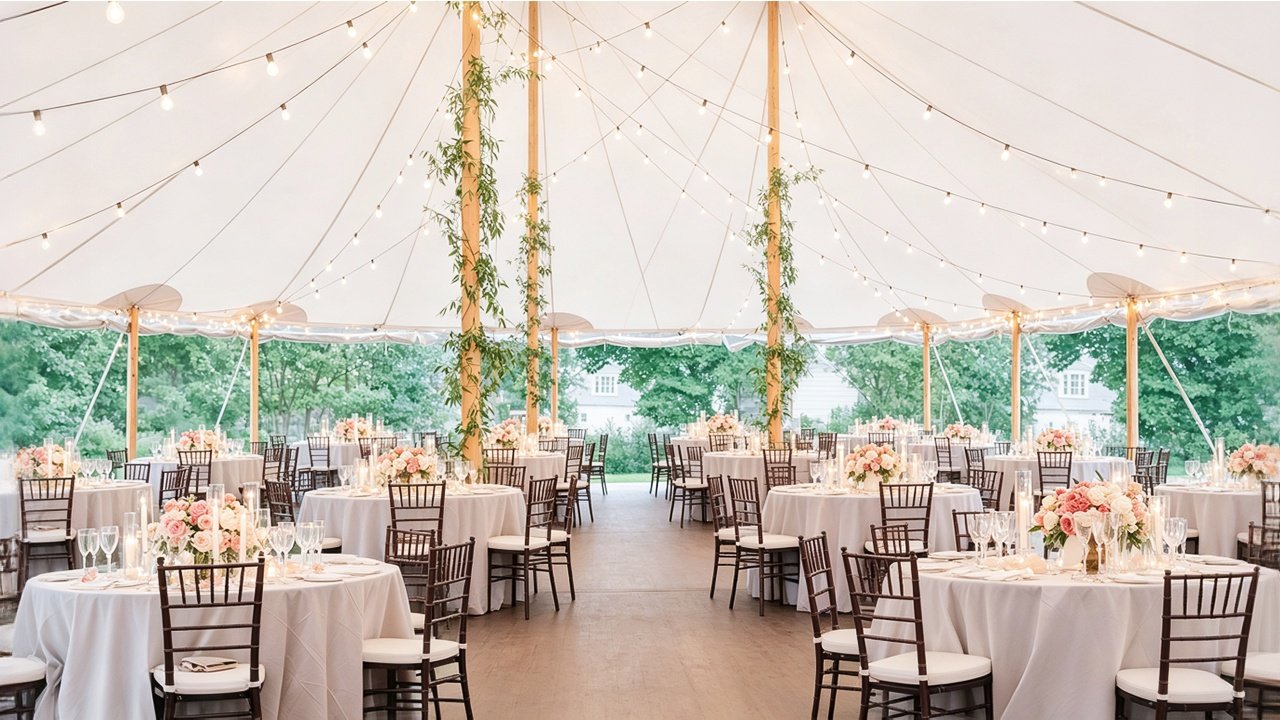
Pole wedding tents are traditional tension-based structures supported by center poles, side poles, fabric covers and tension ropes . They are widely used for garden weddings, outdoor celebrations, and venues that want a classic event atmosphere. The tension system creates stability by distributing forces between the poles, fabric, and anchoring points. The poles can be made from steel or wood. For projects that require higher durability and a more premium appearance, aluminum poles combined with PVC fabric can also be used. As the tent size increases, more center poles can be added to support the structure. Special pole tent designs can also be developed according to your project needs.
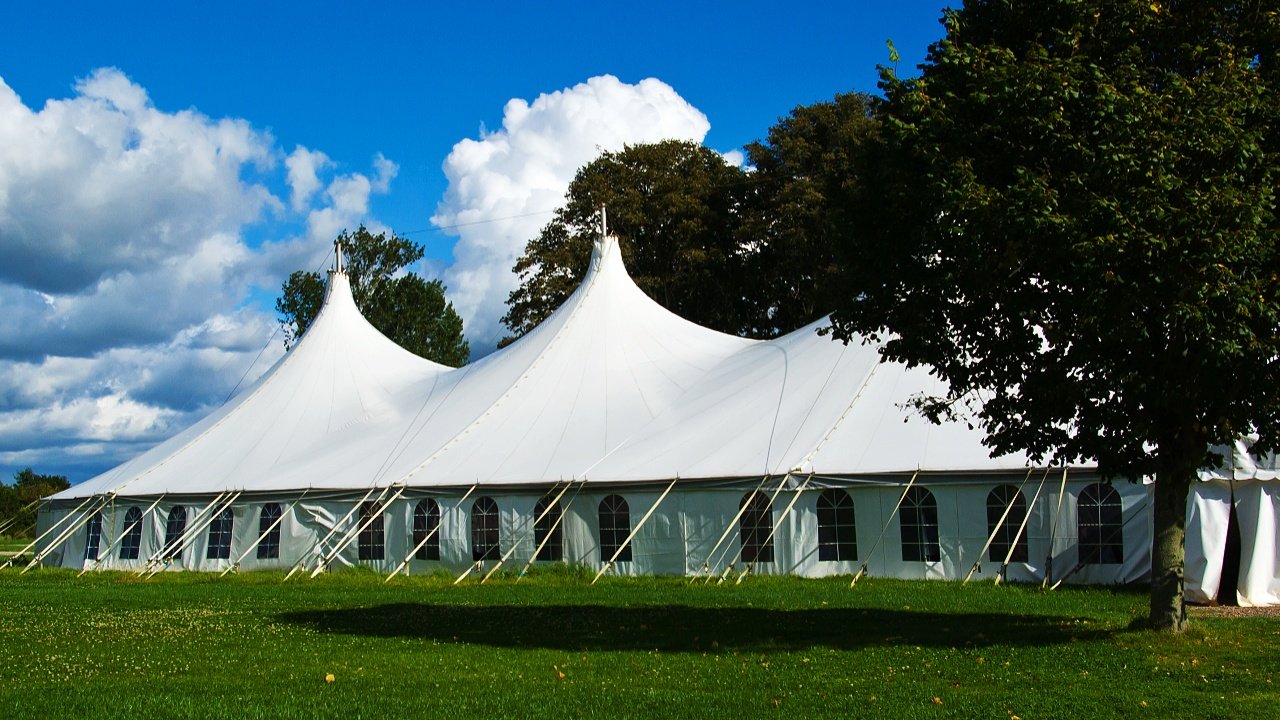
Because of its simple structure and fewer components, pole tents usually have lower installation costs compared with frame tents. However, pole tents require suitable ground conditions because the support system depends on anchoring points and tension ropes. They are generally not suitable for concrete surfaces or locations with limited installation space. To make the center poles decorative, natural elements such as ribbons, greenery, vines, and dried flowers can be added. This makes pole tents especially used for rustic weddings, garden weddings, and estate wedding ceremonies.
Premium Wedding Tents
Premium wedding tents focus on creating unique visual experiences through architectural design, special materials, and customized layouts.
Atrium Tent
Atrium wedding tents combine a glasshouse-inspired appearance with a strong structural system, creating a premium space for high-end wedding events. Their tall ceilings deliver a unique architectural style, as the transparent covering allows plenty of natural light to enter the space, creating a bright and open wedding atmosphere.
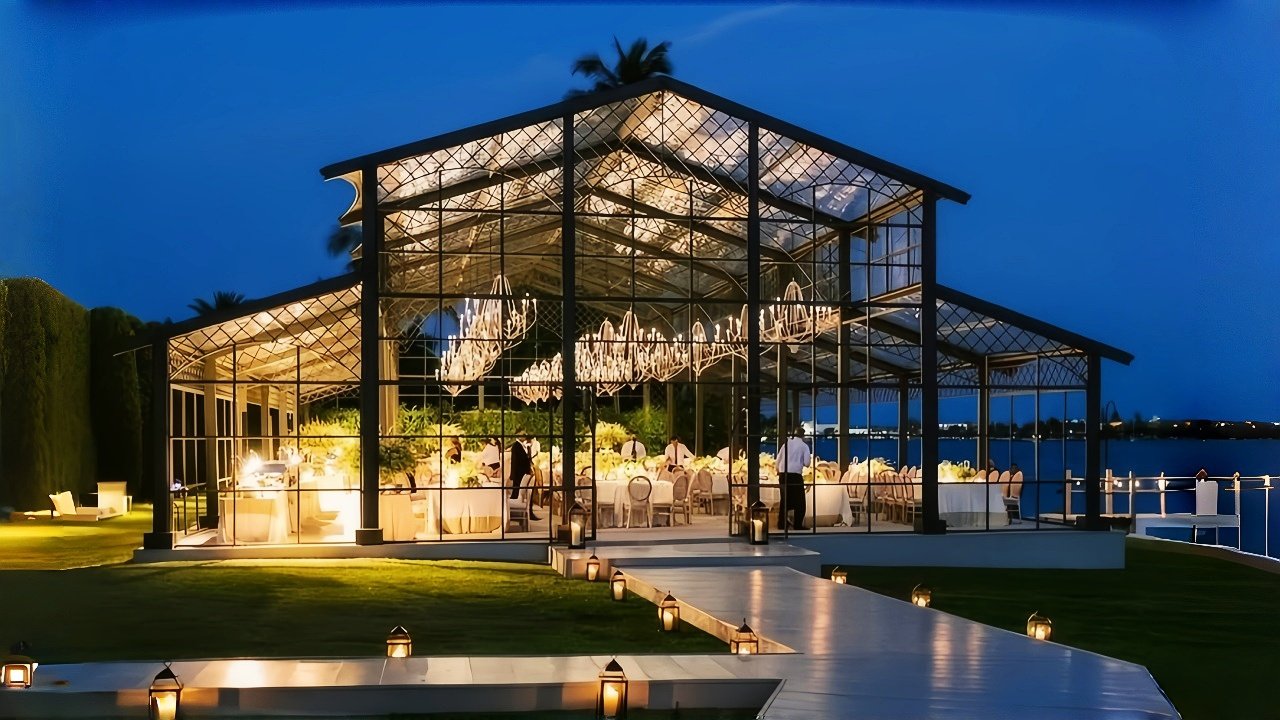
With a special black metal frame, the atrium tent adds modern black lines to the surrounding natural environment, creating a recognizable event space for executive venues. The metal frame structure can be designed according to local weather requirements, including rain and snow conditions. Atrium tents for weddings are available with spans from 9m to 60m, while the length can be customized according to different project requirements. The roof design can also be customized, including A-frame roofs, curved roofs, and high entrance designs. Moreover, the atrium tent supports luxury interior designs, including chandeliers, floral installations, lighting systems, and luxury furniture arrangements.
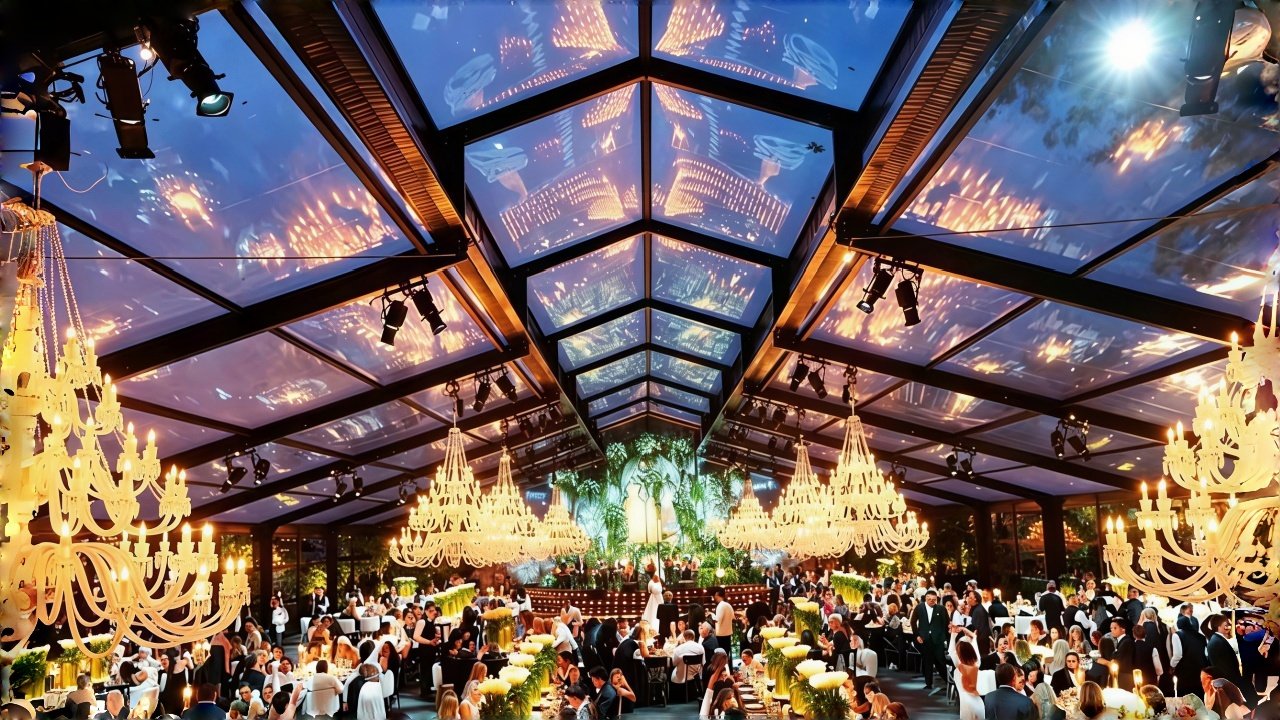
The atrium tent structure is not only a tent but also works as a temporary luxury wedding hall. The refined metal design adds an elegant atmosphere, while plant decorations and lighting create a special outdoor wedding setting. For wedding planners, high-end hotels, and estate venues looking for a premium outdoor event space, atrium wedding tents are a suitable choice.
Sailcloth Tent
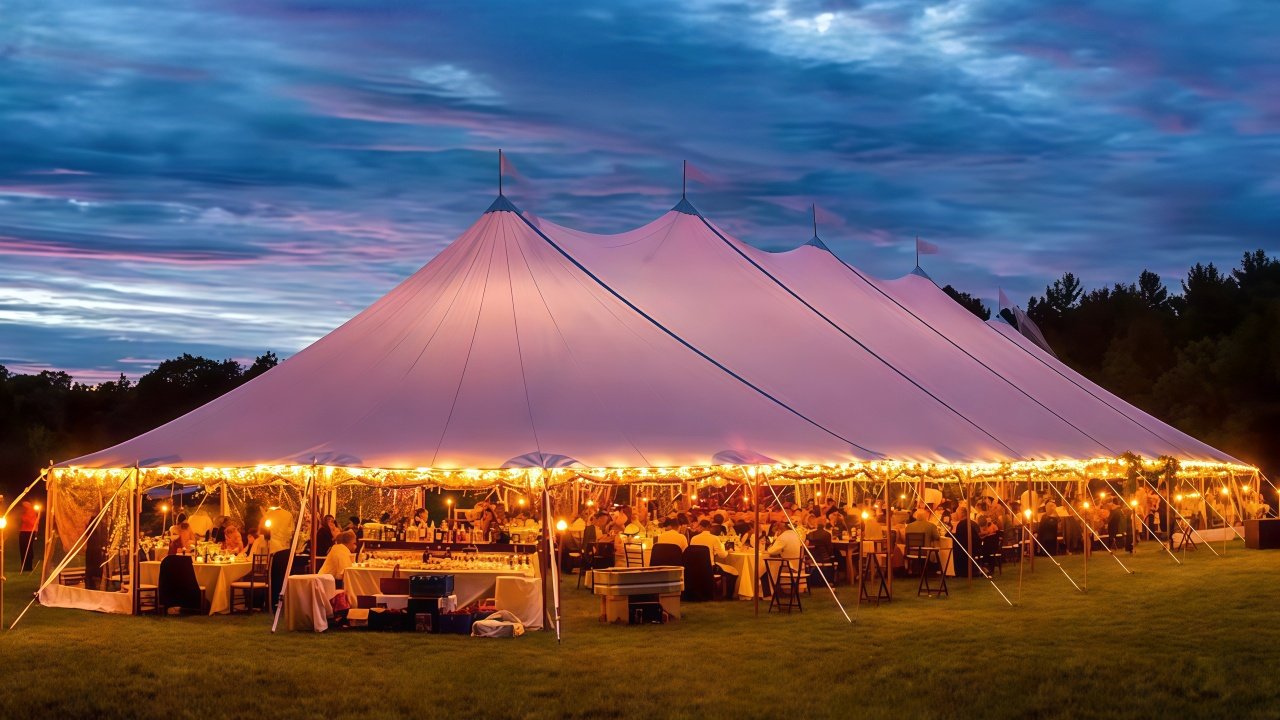
Sailcloth wedding tents are known for their translucent fabric appearance and natural outdoor style, making them popular for garden, waterfront, and countryside weddings. Compared with traditional vinyl covers, sailcloth fabric is lighter and has better light transmission. During the daytime, sunlight passes through the fabric and brightens the wedding space. In the evening, the natural light creates a soft appearance, and when the lights are turned on inside the tent, the fabric produces a warm glow. Especially for wedding venues near mountains, lakes, or other natural landscapes, sailcloth tents blend well with the surroundings and create a simple but elegant wedding style.
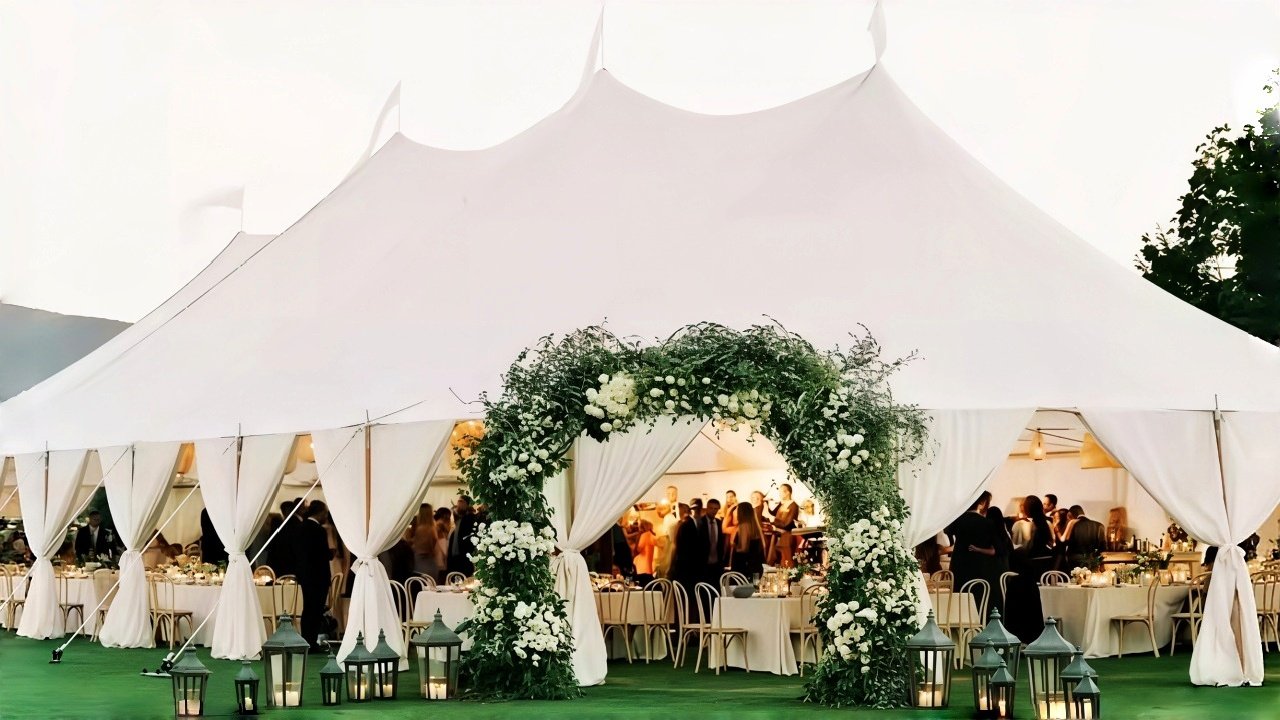
Sailcloth wedding tents are available in different styles, including single-pole, double-pole, and multi-pole structures, which suit different wedding sizes. The fabric is treated with PU coating, which provides UV resistance and waterproof performance. The fabric treatment helps maintain appearance during outdoor use. Transparent sidewalls can also be added. They provide privacy and weather protection while still allowing guests to enjoy the outdoor view.
Clear Top Tent
Clear top wedding tents use transparent roof panels to create an open view of the sky while protecting guests from outdoor weather conditions, widely used in event planning and rental industries. Clear top tents are based on frame tent structures. The main difference is that the roof uses transparent materials to create a clear view of the sky.
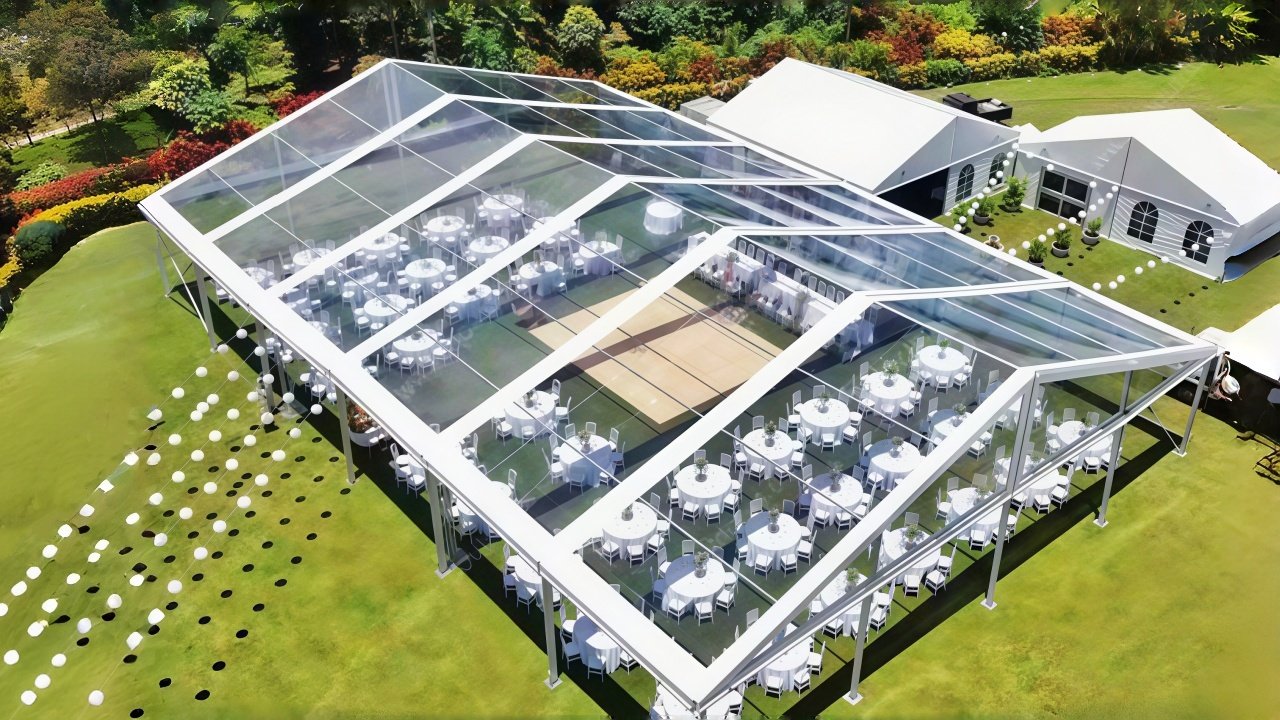
Clear roof wedding tents are especially valuable for premium events where the surrounding landscape or night sky becomes part of the wedding design. During the daytime, sunlight passes through the roof and fills the wedding area. At night, decorative lighting inside the tent creates a warm atmosphere while the sky remains visible above. Their tent covers can be made from glass or PVC materials. Transparent PVC is commonly selected because it provides a better balance between cost and performance.
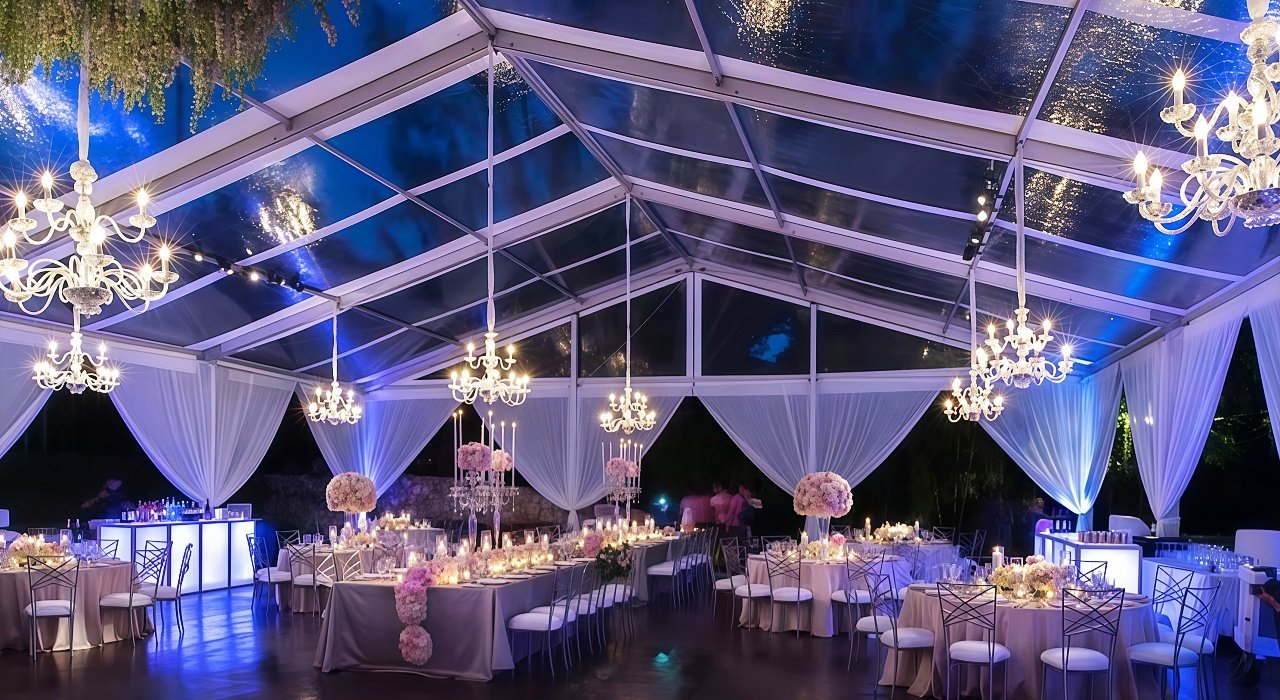
Clear tents for weddings can match different outdoor locations, including backyard weddings and seaside weddings. The open interior space allows various decoration styles, including chandeliers, greenery, flowers, and dance floors. The design is often selected for premium venues, luxury weddings, and events where visual presentation is an important consideration. The materials of the clear-top tents are designed to withstand wind, rain, and snow conditions. In areas with strong sunlight, additional solutions such as air conditioning systems or sunshade covers can be added.
Geodesic Dome Tent
Geodesic dome wedding tents use a geometric frame structure to create unique event spaces without internal support columns. The geometric structure provides a distinctive appearance and allows the interior to be arranged for dining areas, lounges, ceremonies, or themed events. The dome structure is made by connecting geometric sections, either triangles or hexagons.
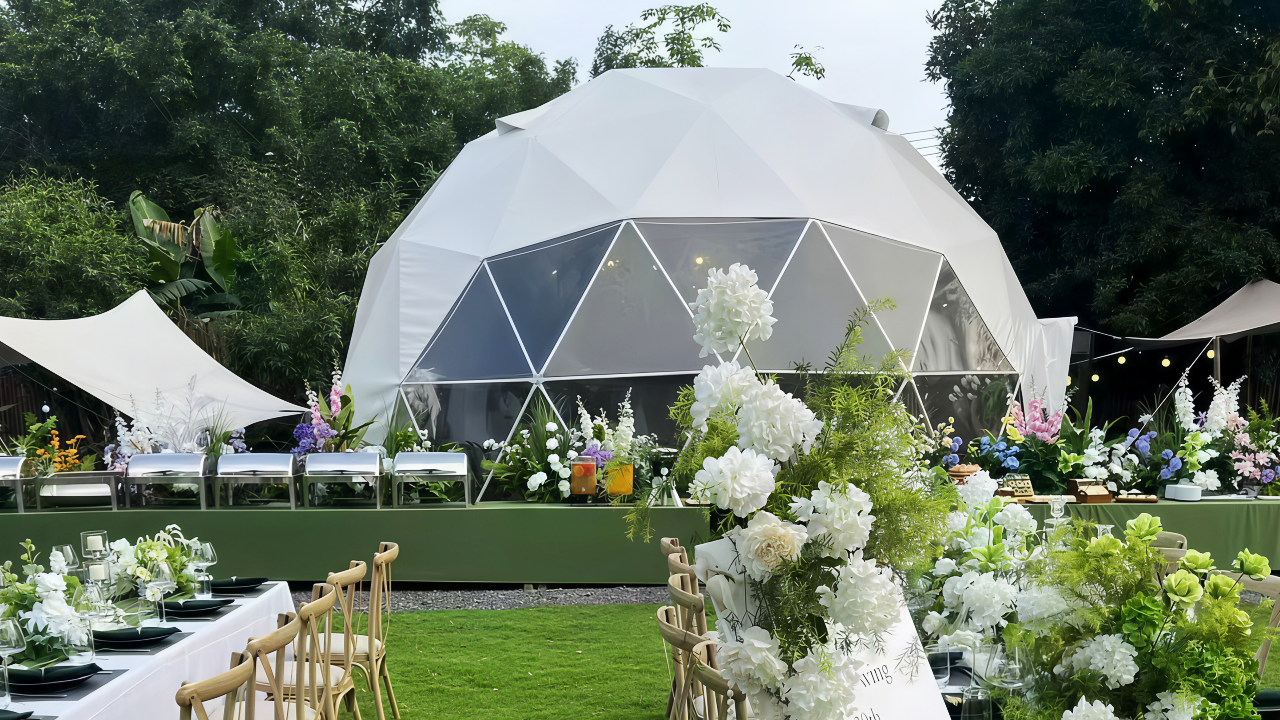
The covers for geodesic dome event structures are heavy-duty PVC fabric to provide protection in different outdoor conditions, though you can also opt for glass. The PVC fabric is available in different weights, usually from 650g/㎡ to 950g/㎡. Color options include white, transparent, yellow, and other customized colors. If you need, transparent panels and colored panels can be combined to create different dome designs.The frame can be made from galvanized steel tubes or aluminum alloy tubes, with a maximum wind resistance of 80-100 km/h.
The stable structure allows geodesic dome tents to be used as temporary or semi-permanent wedding venues. The special dome shape creates a strong sense of space. With lighting at night, the dome can become a glowing structure and create a special atmosphere for wedding events. The dome surface can also be printed with logos or patterns for themed weddings and special events.
Double Decker Tent
Double decker wedding tents are designed for premium event projects that require additional usable space without expanding the venue footprint. They maximize vertical space by adding a second level for additional functions. The supporting structure is manufactured based on floor loading, span requirements, and local safety standards. Two-story tents typically use reinforced aluminum alloy profiles with waterproof PVC membrane roofing, providing a balance between strength, weight, and weather protection.
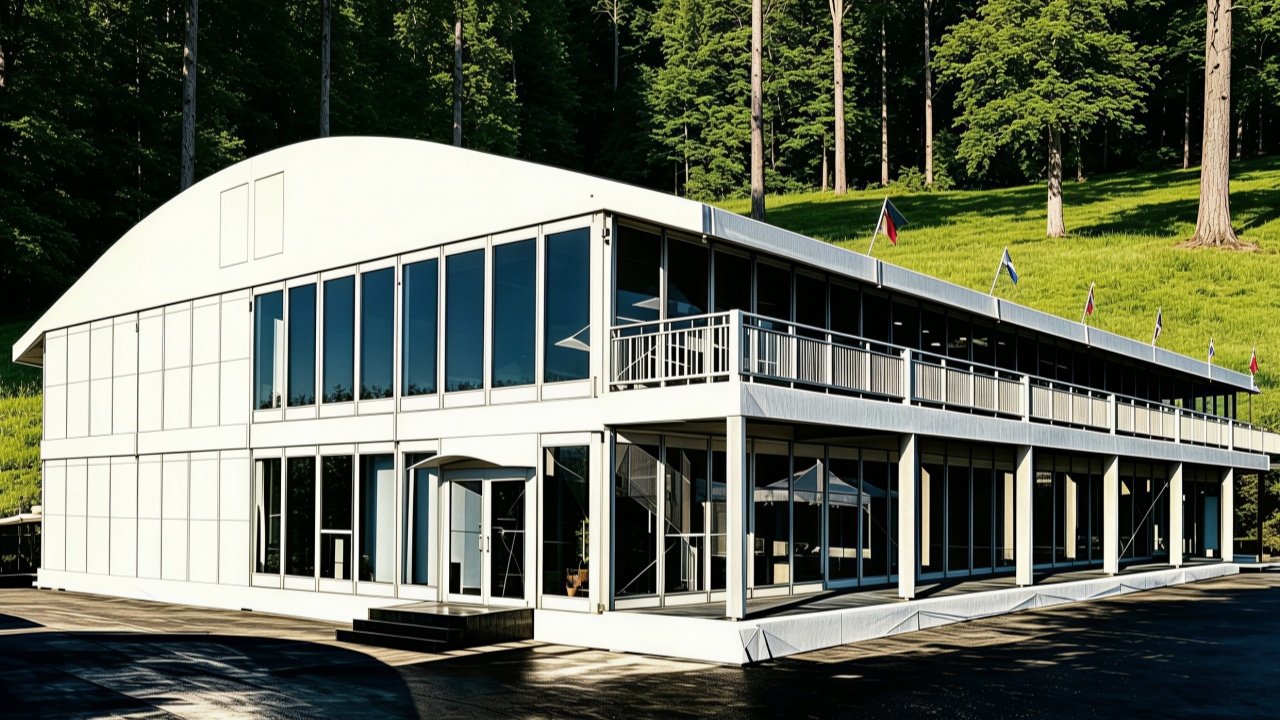
The second floor offers a better viewing position and can be used as a VIP area, lounge, or private reception space. By using vertical space, double decker tents can accommodate more functions without increasing the footprint of the venue. However, compared with single-level event tents, two-layer structure tents require more detailed structural planning, including floor systems, load calculations, stair access, and safety considerations. A double decker wedding tent is ideal for large modern outdoor weddings, temporary venues, and semi-permanent event structures where space utilization is an important consideration.
Flexible Wedding Tents
Stretch Tent
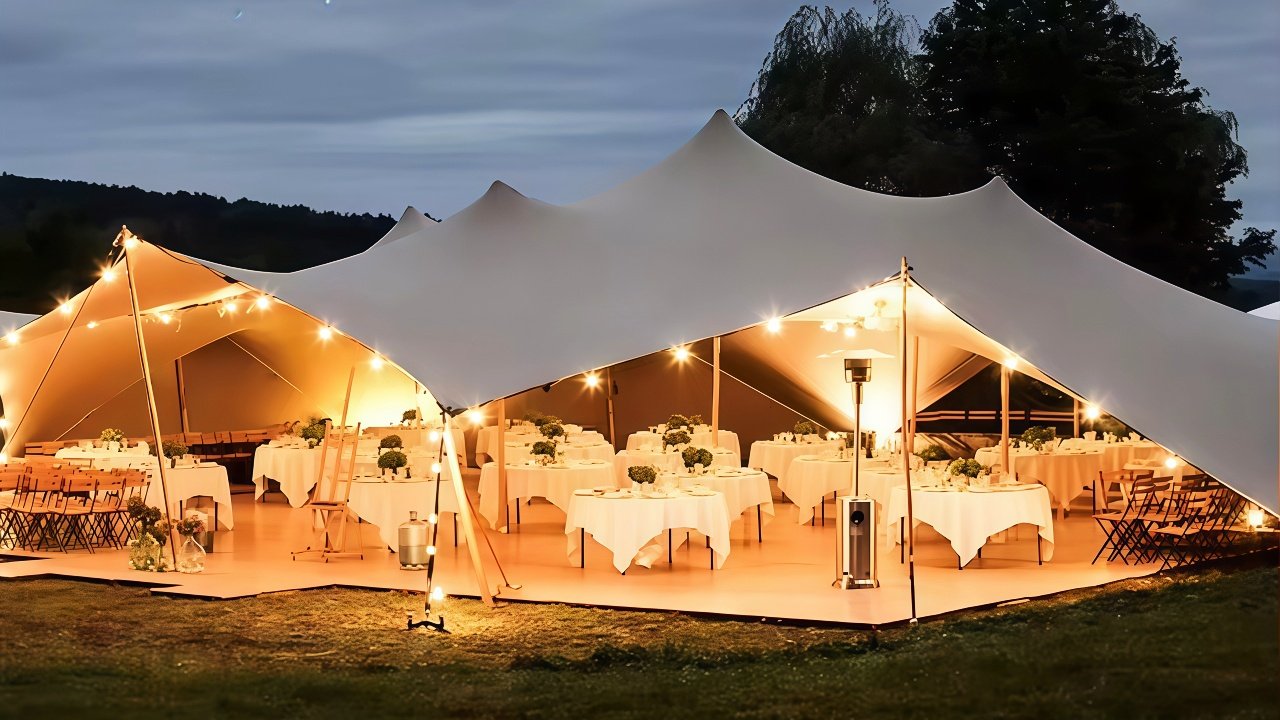
Stretch wedding tents, also known as Bedouin tents or flex tents, are flexible membrane structures designed for outdoor events that require creative layouts and distinctive shapes. The stretch tents use elastic waterproof fabric combined with adjustable poles to create curved, wave-like, or organic shapes .
Stretch tents can adapt to different terrains, including beaches, gardens, forests, and irregular outdoor areas.The waterproof membrane provides protection from light rain and outdoor conditions, while reinforced seams improve durability during repeated use. However, stretch tents are not designed for extreme weather conditions such as strong storms. Adjustable installation points allow event planners to create open layouts, shaded areas, and semi-private spaces based on the event design.
Open-Air Tent
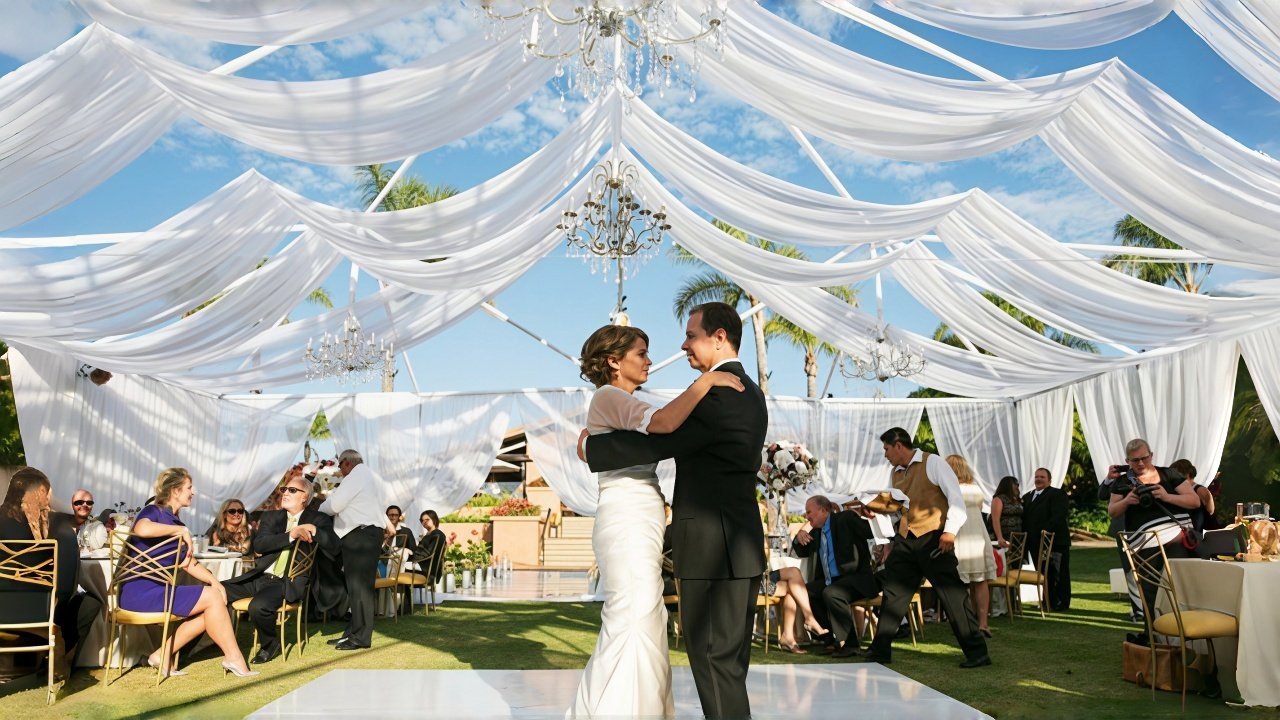
Open-air wedding setups are one of the simplest ways to create outdoor event spaces. They consist mainly of a frame system without covered walls or a roof. The open design keeps guests close to the surrounding landscape and is commonly used for daytime weddings, garden events, and outdoor celebrations. Fabric drapes, fairy lights, and other decorations can be added to the frame to create different wedding styles.
With fewer components, open-air tents provide more freedom for decoration and layout design. The limitation of open-air tents is that they are mainly perfect for good weather conditions because there is no roof or sidewall protection from rain. Open wedding tents are commonly used for venues and planners creating casual outdoor wedding experiences in favorable weather conditions.
Themed Wedding Tents
Tipi Tent
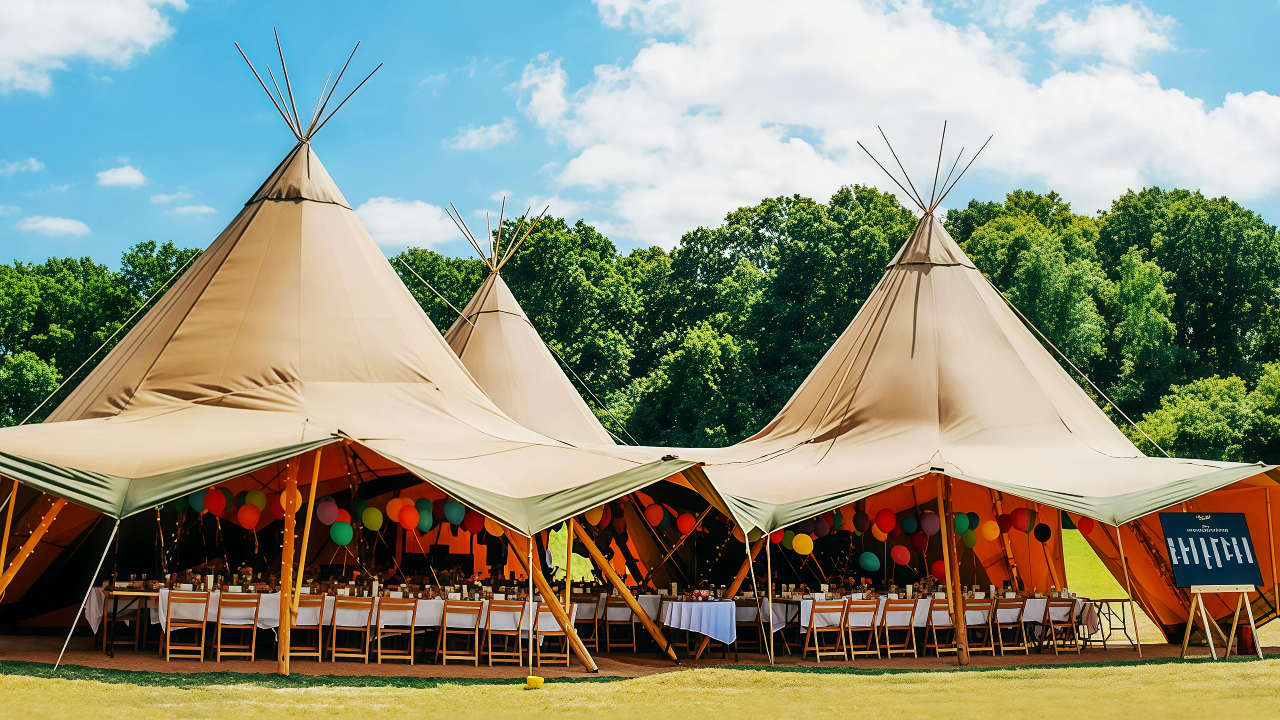
Tipi wedding tents, also called teepee tents, are representative structures for Boho weddings and rustic wedding styles. The unique cone shape creates a recognizable appearance and works well with natural decorations, wooden furniture, and relaxed event layouts. Tipi tents can be combined with multiple cone structures to create larger event spaces. Different tipis can be used as dining areas, bars, dance floors, and other functional areas needed for outdoor weddings.
Tipi tents use wooden structures with canvas fabric. The interior can be decorated with natural elements, such as Bohemian carpets, flower arrangements, and greenery, making it easier to create a special wedding style. Compared with large structure tents, tipi tents are more suitable for intimate outdoor weddings and private events. They usually accommodate around 10-150 guests and create a warmer atmosphere for smaller celebrations.
Yurt Tent
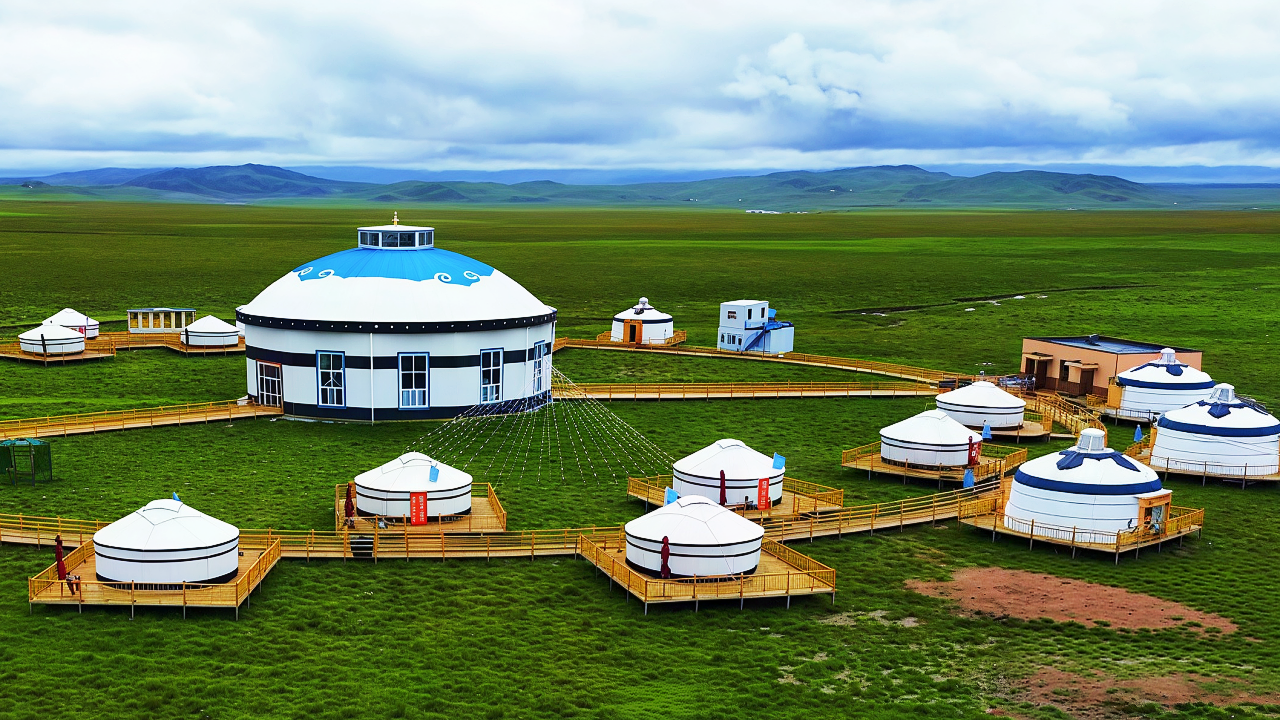
Yurt tents are based on the traditional Mongolian yurt structure, and the circular structure creates an enclosed and warm space that works well for small weddings while combining traditional design with modern comfort. Yurt tents have a compact structure to create intimate wedding spaces. They are popular for rustic weddings, Bohemian weddings, and glamping weddings. They can also be used as bridal suites, wedding lounges, guest resting areas, or temporary accommodation spaces during wedding events.
Wedding Tent Types Comparison
| Tent Type | Best For | Key Advantage | Common Applications |
| A-Frame Tent | Large weddings & commercial events | Clear-span space without interior poles | Rental companies, wedding venues, hotels |
| Pole Tent | Garden and classic weddings | Elegant peaked roof with a traditional style | Estates, country clubs, private venues |
| High Peak Tent | Luxury weddings & premium events | Raised roof design for decoration and lighting | Wedding planners, premium venues |
| Atrium Tent | High-end wedding projects | Architectural design with a modern appearance | Hotels, resorts, estate venues |
| Clear Top Tent | Scenic outdoor events | Transparent roof with open sky views | Wedding venues, resorts, event companies |
| Geodesic Dome Tent | Unique experiences & themed events | Immersive geometric structure | Resorts, glamping sites, event organizers |
| Double Decker Tent | Large events with limited space | Two-level structure to maximize venue capacity | Luxury venues, hotels, event companies |
| Stretch Tent | Creative outdoor layouts | Flexible design with unique shapes | Event planners, festivals, outdoor venues |
| Tipi Tent | Rustic and Boho weddings | Natural cone-shaped structure | Private estates, countryside venues |
Custom Wedding Tent Solutions
As a professional wedding tent manufacturer, Foerstine provides customized solutions for rental companies, venues, and event planners. Every wedding project has specific requirements, including venue conditions, guest capacity, weather environment, and design expectations. That is why customized wedding tent services are essential. We support OEM and custom manufacturing services, including tent dimensions, colors, branding, materials, and accessories. Available options include PVC windows, glass walls, ABS walls, fabric drapes, flooring systems, and event furniture. Whether you want to create minimalist weddings, classic weddings, or luxurious weddings, we can offer a variety of layouts to choose from, and design 3D models to help you visualize the actual effect. As competition in the outdoor wedding market intensifies, having a differentiated wedding tent solution is essential to help you stand out in the industry. Contact Foerstine to discuss your project requirements and receive a customized wedding tent solution.
Conclusion
Wedding tents add flexibility to outdoor wedding venues, accommodating a wide range of events, from intimate garden weddings to large-scale wedding celebrations. Frame tents are ideal for flexible commercial applications, pole tents suit classic outdoor weddings, while luxury structures such as atrium and clear top tents create premium experiences.
You can select the appropriate wedding tent structure based on venue conditions, guest capacity, weather requirements, and the desired wedding style. For rental companies, venues & hotels, and event planners, working with an experienced manufacturer helps ensure the right structure, materials, and customization options for each project. If you’re having trouble choosing the right wedding tent, contact us now, and we’ll provide an exclusive wedding tent solution within 24h.
FAQs
How to Choose the Right Wedding Tent?
To choose the right style of wedding tent, you need to consider the specific requirements of the event. The best wedding tent choice depends on the following five factors:
Wedding Styles
The appearance of the wedding tent forms the foundation of the entire wedding event and is influenced by details such as structure, materials, color, and decorations. Different tent structures can create different atmospheres, ranging from simple garden weddings to large-scale, luxurious outdoor celebrations.
Venue Location
The installation location is also a key factor to consider. Frame-style wedding tents can be set up on any surface—including not only undamageable concrete but also soft sandy ground—while pole-style tents require suitable ground conditions and sufficient space to place support poles and guy ropes, and are generally limited to loose soil surfaces such as grass, mud, or sand.
Event Scale
The layout plan will determine the required tent size. In addition to the seating area, your wedding may require space for a ceremony area, dining area, dance floor, stage, DJ booth, bar, and service area, all of which should be designed based on your wedding business. The number of guests to be accommodated is also a key factor.
Weather conditions
When selecting a tent structure, you should also consider local environmental conditions. Wind direction, rainfall, snow load, and sunlight exposure can all influence material selection and design. Aluminum frames and PVC fabric are the most common combination, capable of withstanding all types of rain and snow. If the local climate is particularly harsh, you can customize the tent structure and materials.
Purchase Budget
Your budget will also influence your choice. Generally speaking, for the same materials and dimensions, all pole-supported wedding tents are less expensive than frame tents, and among frame tents, A-frame wedding tents offer the best value for money. The tent material also affects the price; aluminum poles or frames are highly durable and can last for more than 15 years, but they are more expensive than steel.
Which Type of Wedding Tent Is Best for Rental Companies?
If you’re an event or tent rental business, we highly recommend choosing clear-span wedding tents—especially affordable and durable A-frame tents. A-frame tents are supported by aluminum alloy and PVC, offering a sturdy structure that can serve you for over decades. Their classic A-frame structure, combined with a wide range of decoration options, can meet a wide range of clients’ desires for a beautiful and comfortable outdoor wedding.
Furthermore, modular tent structures make them easy to set up, saving time and labor costs, and allows for the repeated assembly and disassembly required in the rental industry.
Which Wedding Tent Is Best for Luxury Wedding Projects?
Atrium tents are undoubtedly one of the best choices for creating a luxurious and high-end wedding atmosphere. Their soaring ceilings and elegant black-lined frames naturally add a sense of sophistication and grandeur to the venue.
The spacious interior provides an ideal setting for premium decorations. Crystal chandeliers can create a sparkling and glamorous effect, while floral garlands and greenery bring a touch of mystery and natural charm. In addition, the intricate carved details of atrium tents further enhance the elegant and romantic atmosphere, making them perfect for upscale wedding celebrations.
What Factors Affect Outdoor Wedding Tent Selection?
Outdoor wedding tents need to be selected according to the local environment and weather conditions.
Wind direction, rainfall, snow load, and sunlight exposure may affect the choice of tent structure and materials.
Different tent structures have different performance in outdoor conditions. For example, sailcloth tents and metal frame tents have different wind resistance characteristics.
Selecting the right structure and materials according to the project location helps create a safer and more comfortable wedding space.
How Much Does a Wedding Tent Cost?
The cost of a tent wedding varies depending on the tent type, size, materials, design requirements, and installation conditions.
Different wedding tent structures have different price levels. Standard frame tents and pole tents are commonly used for regular outdoor weddings, while luxury options such as atrium tents, clear top tents, and double decker tents usually require a higher budget because of their structure and design.
Other factors may also affect the final cost, including transportation, installation difficulty, flooring, lighting, furniture, decoration, and additional event equipment.
For a more accurate quotation, tent manufacturers usually need details such as the tent size, venue location, guest capacity, and specific project requirements.